Displaying items by tag: Frank Sinatra
Sinatra - to be Frank
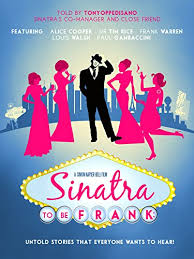
SINATRA – TO BE FRANK
US, 2015, 80 minutes, Colour/black and white.
Directed by Simon Napier-Bell.
A popular documentary, produced in England and directed by the boss of Wham, Simon Napier-Bell, this nicely-entitled film was released for the hundredth anniversary of Frank Sinatra’s birth.
An enthusiastic opening with Sinatra’s fandom in the 1940s, then a journey through the decades, named, highlighting his career and, the background of his life. Born in Hoboken, New Jersey, the film shows his Italian family background, only son, early talent, working in a group, the Hoboken Four, record contract, early indications of Sinatra controlling his life and career, taken up by Harry James and Tommy Dorsey (learning from him the importance of timing and breathing).
It is interesting in retrospect to see the “bobbysoxsers” of the 1940s, thousands of girls lining up in adulation of Frank Sinatra (20 years before the Beatles). A successful singing career with bands, radio, records, inaugurating albums when LPs were developed in 1948, later developing thematic albums, his popularity for half a century, records, radio, television – and, from the 1940s, the movies. Social media, one of the best ways to be known was to appear in the movies.
There were the MGM musicals, an award from Louis B Mayer, then his being fired when he made a costing remark about Mayer and this was reported back to Mayer. 1950 and his being a little old hat in terms of song, not getting good parts, and then fighting for his role as Maggio in From Here to Eternity, success, Oscar, a range of strong films like The Man with the Golden Arm, musicals like Guys and Dolls, with Bing Crosby in High Society… Then the change for the 60s, the Rat Pack and his friendship with Sammy Davis Jr (and race issues), a further film career.
There was his marriage to his childhood sweetheart, Nancy Barbato, their two children. Then there was his relationship with Ava Gardner, too similar people noted, a short marriage. Then, there was a surprise of his marriage to Mia Farrow, brief, but, finally his marriage to Barbara Marx and some serenity in his old age.
The film highlights that he was critical of Elvis Presley but there was some kind of television reconciliation and singing together, and his realisation that he had to adapt to changing times, changing popularity in musical styles – which he did, culminating, of course, in My Way.
There are discussions about his relationship with mobsters, from his father working in bootlegging, to friendships with a range of the Mafia types.
Considered one of the greatest if not the greatest popular singers of the 20th century, he identified with the lyrics and the emotions of his singing and reached out to a very wide audience over quite a long time.
A more comprehensive documentary about Frank Sinatra was released also for his centenary, a two-part television series, two hours each, directed by the celebrated
Sinatra: Being Frank
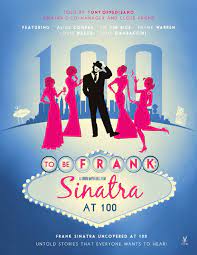
SINATRA BEING FRANK
US, 2015, 81 minutes, Colour.
Directed by Simon Napier-Bell.
Rock manager for many artists, Simon Napier-Bell, writer, speaker and documentary filmmaker, made this very interesting and informative documentary about Frank Sinatra for the centenary of his birth, 2015.
In 80 minutes, the director has furnished the essential biography of Sinatra and has created a portrait of Sinatra as a person, as a singer, as an actor, as a 20th-century celebrity.
The initial emphasis is on Sinatra and his singing abilities which were acknowledged over the decades in the 20th-century and are still acknowledged in the 21st-century. There is his Hoboken, New Jersey origin, his family, Italian background, his father has not supportive of his ambitions to be a singer. He moved to New York in the mid 30s, with the singing group, recognised, small in stature (he does, in media interviews, explain the difficulties of his birthing and his grandmother reviving him but his continuing to be small), but seen initially with a strong ego (stronger throughout the years) in giving information, interviews. He is seen by Harry James, leader of his orchestra who promotes him. And this leads to work with bandleader Tommy Dorsey in the early 1940s, Sinatra saying he observed Dorsey’s skill in breath control and planning the trombone as a way of understanding his own singing breath control. And then came the recordings.
The film then moves on to Sinatra as an actor, is always keen awareness of the times, knowing that personalities needed broader recognition and that this came through the movies. After a few films, many with guest appearances, Louis B Mayer giving him jobs at MGM, especially Anchors Away and Tell the Clouds Roll By.
And, throughout the film career, the recordings, and his initiatives in working with arrangers like Nelson Riddle, and his creation of album collections, somewhat new at the time, but continuing throughout his career, millions of sales, millions of fans, many awards.
The film also offers something of his relationships, his early marriage to childhood friend, Nancy Barbato, and the birth of his children. Then there is the attraction to Ava Gardner and their being married, exhilarating for some years, but Ava Gardner noting that they were too alike for it to last. Then there is the puzzle of his attraction to Mia Farrow in the 1960s – and the indication that she set her cap at him and exercise some control. This did not last. In later life, he met Barbara, the wife of the Zeppo Marx and married her, she understanding him and supporting him as he grew older.
There is the famous slump around 1950, sacked by Louis B Mayer for slighting him, difficulties with recording companies, small film roles, and his agitating for a role in From Here to Eternity, Ava Gardner canvassing head of Columbia, Harry Cohen’s wife, the film noting that in his Oscar acceptance speech, Sinatra did not mention Ava Gardner. The mid-1950s were important with such films as The Man with the Golden Arm, Guys and Dolls. Unfortunately, for film fans, the line of films, starring roles does not continue, especially with the number of detective stories he made during the 1960s.
Then there is the question of the Mafia connections, Sinatra in interviews explaining the Italian family background, his meeting with various Mafia chiefs, taking this for granted. The other area of Sinatra’s life that is not treated in the film is the 1960s Rat Pack, his friends, the performances, their films together.
Rather, the theme of the film is how Sinatra adapted to every decade, from the early Bobbysoxers fandom, to popular songs of the 1950s, adapting to the different rhythms of the 1960s, and even more adapting during the 1970s, culminating in New York, New York, and this documentary saying that the lyric, “if you can make it there, you can make it anywhere” does sum up Sinatra’s career.
During the 1980s and into the 90s, he did make some albums, not always successful, and also many appearances, fans always loyal, even the younger generations. Sinatra had the nickname The Voice, knew how to control his voice, had great sense of timing with lyrics, Sinatra as something of a singing icon of the 20th century.
