Displaying items by tag: David Wenham
But Also John Clarke
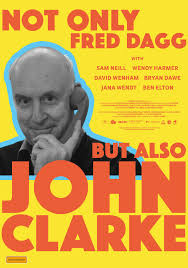
BUT ALSO JOHN CLARKE
Australia, 2025, 102 minutes, Colour.
Sam Neill, Wendy Harmer, David Wenham, Bryan Dawe, Jana Wendt, Ben Elton, Andrew Denton, Andrew Knight, Ernie Dingo, Philip Adams, Sean Micallef.
Directed by Lorin Clarke.
Australia has produced many outstanding comic writers and performers. Amongst those who stand out, of the many, in recent decades are the back affable Paul Hogan and the satiric Barry Humphreys. And, somewhere in the middle, affable but, developing a strong sense of satire.
Sadly, John Clarke died in 2017 and is already becoming a memory. But, in his heyday in his native New Zealand, with his character, Fred Dag, and then in his topical satirical interviews on television and the series, The Games, he was immediately well known and appreciated. It is important to have a documentary like this to perpetuate his memory.
And it has been made by his daughter, Lauren Clark, herself working in media, the great deal of television and video material available to be incorporated here. And, she has many contacts, sitting down casually to chat with them and their responding with enthusiasm, wholeheartedly, and some very happy memories.
As indicated above in the credits, these are some of the very well-known names of those who appear, chat, and, many of them voicing excerpts from Clarke’s own story, especially Sam Neill, much the same age, who knew him in New Zealand with their studies and work with him over the years in Australia. (There are some excerpts from John Ruane’s comedy, Death in Brunswick, which starred both Sam Neill and John Clarke.)
The early part of the film appeals to the Australian audience, especially with interviews with Brian door, his partner over decades in the conversations, no make up, Clarke just keeping his own mannerisms but assuming the character of the politicians or other celebrities to be interviewed, deadpan responses to all the questions from Brian door.
Then the film goes back to Clarke’s origins in New Zealand, a focus on his parents and their experience of World War II and the consequences, like feeling that he could not live up to his father’s expectations, more than a touch of rebellion, especially manifest at his school, then at University and in his acting and writing, the character of Fred Dag, New Zealand farmer, emerging in the 1970s, some broadcast managers wary, but the public responding well, the possibility of social comment and critique through parody and satire.
Then the advice of a move to Australia, the successive steps in his career, an overview of television comedy, especially, from the 70s to the 2010 is.
So, this is a labour of love for his daughter – and there are some significant interviews with John Clarke’s wife, Helen McDonald, married for 44 years.
For those not familiar with John Clarke, it opens up an interesting and entertaining portrait as well as an overview of comedy on New Zealand and Australia and radio and television.
For those familiar with John Clarke and who admired him, an hour and three quarters happily spent in his company.
Spit
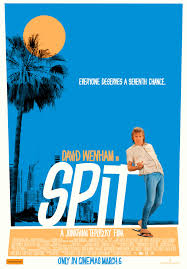
SPIT
Australia, 2025, 102 minutes, Colour.
David Wenham, Arlo Green, David Field, Gary Sweet, Lewis Fitz-gerald, Maude Davey, David Roberts, Helen Thomson, Andrea Moore, Pallavi Sharda.
Directed by Jonathan Teplitzky.
In 2002, there was an award-winning comedy-drama, Getting’ Square, set on the Gold Coast, the story of drugs, corrupt police, investigations – and the roguish character, John Francis Spitieri, whom everybody called Spit, an addict but reforming, thongs, old crumpled clothes, providing a great deal of comedy along the way.
It is not necessary for audiences to have seen Getting’ Square to enjoy this follow-up, focusing on Spit. In fact, the film has a lot of things going for it, indeed more than a lot of things. Writer, Chris Nyst, is a criminal lawyer and knows the characters that he has created for the original and for Spit. David Wenham has noted that he is an ambassador for Kings Cross’s Wayside Chapel and is very much aware of many variations on Spit. Both Nyst and Wenham won AFI awards back then and are candidates for 2025, an even better script, and Wenham having lived with this character over a long time.
The screenplay is alive, vivid life through the characters. We laugh out loud then, only minutes later, some moments of deep humane pathos on serious themes, then laughs again and throughout some serious and violent sequences connected with the thugs and the law. As mentioned, these characters were in the original and there are some references back, some clips from the original – and, with such admiration for the court scene in the original, another court scene which is as good.
But, this time, Spit returning to Queensland on a fake passport and detained by the authorities, is more of a larrikin, an Aussie larrikin rather than a rogue. His face is now weatherbeaten. And he has his ambling gate, the thongs, the jeans, weary on the surface but pretty shrewd when he wants to be – and this is especially the case in the inner unexpected solution to his problems.
He is still pursued by the drug chief and the corrupt police (snarling Gary Sweet and David Field). But, on landing he is sent to a detention centre, encountering the refugees, listening to their stories. His dealing with them, teaching English, is very enjoyable Australian comedy, especially in dealing with Australia’s and the world’s hyper- abundant F-word. Spit sees it not as an swear word but as an emphasiser (though he cannot quite pronounce that correctly). His class illustrating its variety of emphases is quite hilarious (even for those who do not yet use it) and is followed up with many variations on it throughout the film.
But, for pathos there is the story of Spit’s sister and their separation, foster homes, reunited, her son, her illness and the demands on Spit’s affection.
One of the clever aspects of the screenplay is the frequency of quips, word misunderstandings that provide a lot of wit. And there is the courtroom, David Roberts providing a prosecutor straight man to Spit’s mischievousness, and all about reading glasses. David Wenham shows how adept he is. We know he does serious well, but he really embodies the comic Spit.
And he plays alongside a number of Australian character actors, especially with New Zealander, Arlo Green, as a sympathetic Syrian refugee.
Jonathan Teplitzky directed Getting’ Square (and also directed Wenham in Better than Sex) and the excellent, The Railway Man.
This reviewer would enjoy watching it again and certainly laughing with it.
- The popularity of get in Square? A criminal world in Queensland? The quality of the screenplay and awards, David Wenham as spit and his awards? Welcoming him back with his own film?
- The Queensland settings, airports, detention centres, restaurants, funeral parlours, police precincts, the courts, gardens, the beach and the sea, hospitals? Atmosphere? The musical score?
- David Wenham’s portrait of Spit? His appearance, clothes, thongs, swagger? His vocabulary? The Australian larrikin, drugs in the past, criminal connections, reform, time in the UK, the Falls passport, arrival, behaviour at the airport, in the detention centre? Criminals discovering his being alive? The law and courts discovering that he was alive?
- His background, story of his childhood, parents, his sister, the fire, foster care? The reuniting, his sister, death, her son, the bonding with Spit, her illness, death? His responsibility for the boy? Talking to the authorities, the future for him and the boy?
- In the detention centre, Spit at something of a conman, taking the classes, listening to the stories of the refugees, giving them Australian names, vocabulary, the class on the use of the F word? Meeting with Jihad and his Syrian background story? Friendship?
- Chika, His role in the past, drugs, the violence, his thugs, connections? Wanting to get Spit, sending the thugs, Spit in the confrontations, escaping? De Viers, police, corruption, his assistant, manipulation, contact with Chika? Plots, arrests, abducting Spit, holding out the window, and that you are later revelation for the solution? Spit and his escapes, disguised as the woman, running through the suburbs?
- Jihad, out of detention, skill with flowers, his relatives, the welcome, the parties, at the funeral parlour, helping Spit, becoming more involved?
- Spit, going to the funeral parlour, memories of the first film, the wife, the money, setting up the funeral parlour with the money, Spit and his share in the ownership? Their involvement in saving Spit?
- Court, the police, tough attitudes towards spit, towards those in the detention centre? Hiring the lawyer, her style, pushy, ambitious, self promoting? In the court? Nile to, the past, wanting to get Spit, the prosecution in the court, Spit and his behaviour, language, the comedy with the glasses and is eventually stealing them in Tool losing them are not able to read the documents?
- The police and the court, Chika and his pressure on the criminal, the criminal turning round, killing Chika?
- The final Revelation, Spit and his writing on the wall, proving that he was abducted, vindicated?
- The 21st century Australian comedy, larrikin style?
