Displaying items by tag: Benny Safdie
Are You There, God, It's Me, Margaret
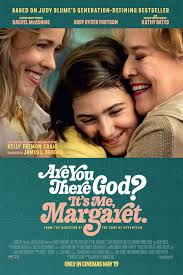
ARE YOU THERE, GOD? IT’S ME, MARGARET
US, 2023, 106 minutes, Colour.
Abby Ryder Fortson, Rachel McAdams, Kathy Bates, Benny Safdie, Elle Graham, Amari Alexis Price, Echo Kellum.
Directed by Kelly Craig
This was the title of the very popular novel from 1970, written by Judy Blume. It has continued to be popular, especially with the young readers. 50 years later it is now become a popular film, well reviewed.
The Margaret of the title at the opening of the film is aged 11, having to move to New Jersey from New York, missing her friends. However, as she grows older, she makes many more friends, school, all kinds of issues as the girls near puberty, especially anticipation of their period. In this way, the film will speak to young girls in the audience of this age.
However, Margaret also speaks to God, conversation, requests, puzzles, losing faith in him, questioning, ultimately regaining faith and making communication again.
Margaret also has a challenging faith background, her Christian mother, played well by Rachel McAdams, her father, played by writer-director, Benny safety is Jewish. And Kathy Bates is present as a strong-minded grandmother.
With the difficulties, Margaret is it helped by one of her teachers, Mr Benedict, who listens to her questions and suggests that her year research be on religion, religious issues, different faiths.
This makes the film is significant for the younger audiences, especially the girls in the audience, identifying with Margaret, but having the possibility of opening up their own religious issues as they watch the film.
Abby Ryder Fortson is persuasive as Margaret.
- The popular book by Judy Blume, 1970s, popular for half a century, the film version?
- The New York City setting is, the New Jersey settings, the suburbs, homes, school, outings, celebrations? The range of songs from the 1970s, tone, comment?
- The New York situation, Margaret, 11, happy at school, returning from the camp, her loving parents, her father’s promotion, Sylvia present, her attitude, breaking the news of the move, her parents’ reaction, Margaret’s reaction, Sylvia always sardonic?
- Margaret’s reaction, not wanting to move, also friends? The transition, the farewell, arriving in New Jersey, the atmosphere, the house?
- Margaret at 11, no brothers or sisters, devotion to her grandmother, no mention of her mother’s parents, the religious issue, Jewish or Christian, leaving it for Margaret to decide? Her image of God? End of primary school, grade 6? Expectations?
- Nancy and her arrival, confident, taking over, invitation to Margaret, at school, the next desk, Mr Benedict, the attention to Philip, despising of Norman, criticisms of Laura? Nancy in the club, the creating the rules, the 11-year-old’s perspective, boys, secrecy, wearing a bra, no sox (and Margaret’s blisters)? The meetings, the gossip, the giggling, the issue of wearing a bra, the chant for the bust? Nancy’s brother and Moose breaking in? Margaret and her attraction to Moose, his mowing the lawns?’
- Barbara, loving mother, absent parents? The story of the parents, evangelical, condemning her for marrying and you? Margaret asking the questions, Barbara telling the story, sending the card, their reply, the coming to visit, the clash with the visit to Florida for Sylvia? Sylvia and her friend arriving? The interactions, the meal, the mother being evangelical, Sylvia’s reaction, the fighting? Margaret’s reaction, not believing in God?
- Margaret, religion, her comments on her paper for Mr Benedict, his discussions with her, her project, her later writing him the letter, his sympathetic ear?
- The issue of God, the dialogue of the film, Margaret and her manner of discovering God, talking to God, asking whether God was there, the issuance and the various crises, especially about the period, her friends, the boys, the relationship with God? Her going to the revival meeting with Janie? Earlier taking her to the synagogue, its style, Sylvia enjoying the ceremony, Margaret and the Hebrew? Going to the Christian church, the Gospels? Laura, and going to the confessional?
- The bond with Sylvia, the phone calls, going to Gilbert and Sullivan in the park, invitation to Florida? Sylvia and her life in Florida, the boyfriend, ringing him to New Jersey?
- The issue of bras, her wanting to buy one, with her mother, the shop? The other girls and the issues? The issue of periods? Gretchen and the suddenness, the reaction? Laura and her lie about her own, then the crisis in the restaurant? Janie is a good friend, buying the pads? And then her own period, with her mother?
- The preoccupations about sex, the anatomy book and the discussion, the Playboy photos? The reaction to the boys? Nancy and her attitudes, Philip, the game and spin the bottle, Norman’s house, two minutes in the closet, Margaret with Philip, his kiss, and later disillusioned with him? Her attraction to Moose? The visit to radio city music Hall?
- The portrait of Margaret’s parents, her father, his job, benign, the accident with the mower, easy-going, relationship with his mother? Barbara, always nice, supporting her daughter, supporting her husband, giving up her artwork, teaching, the household, not good at cooking, volunteering for all the committees at the school? The situation with her parents and their visit?
- Margaret, coming through the trials, going to the camp, rediscovering God?
Smashing Machine, The/ 2025
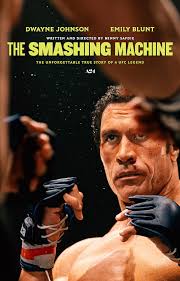
THE SMASHING MACHINE
US, 2025, 123 minutes, Colour.
Dwayne Johnson, Emily Blunt, Ryan Bader, Bas Rutten.
Directed by Benny Safdie.
The Smashing Machine was the professional name for fighter, Mark Kerr. (There had been a 2002 documentary with the same title focusing on this period of Mark Kerr’s life and career, sport, achievement, his relationship with Dawn Staples.)
The film focuses on the development of fights, boxing, wrestling, martial arts, their combinations, and the development of the UFC, Ultimate Fighting Championship. For those in the know, there will be great interest in this re-creation of the period, the staging of fights (which may be more than a touch alarming and/or offputting for those not familiar). And there will be the interest in this portrait of Mark Kerr, as a fighter, as a personality, his public image, his private life, his relationship with Dawn Staples.
The film opens with fights and interviews, enabling the audience to enter into this world.
The main expectation from audiences for The Smashing Machine was to see Dwayne Johnson in the role, bringing his long experience in wrestling to the part, and also showing his ability in acting and performance. Make up and hair transform him into the appearance of the actual Mark Kerr rather than a variation on Dwayne Johnson (except when he does shave his head towards the end of the film). The Mark Kerr of this drama comes across much more sympathetically than the actual Mark Kerr of the documentary. However, at the end of this film, there are some 2025 scenes of Mark Kerr himself, many years after retiring from fighting in 2009, at a supermarket in Arizona, smiling, genial and friendly – and some photos during the credits with Dwayne Johnson preparing for the film.
Mark Kerr comes across well to fans and the media, this film focusing on the fights in Japan, the media and interviews there, rules and regulations, the crowds at the bouts, the physicality of the fighting and its consequences, physically, psychologically, emotionally. Key to Mark Kerr’s experience is his beginning to take painkillers, drugs and injections, their increasing, having an effect on his moods, ultimately his going into rehab after a physical collapse but emerging once again.
Emily Blunt (who had starred with Dwayne Johnson in the Disney action adventure, Jungle Cruise), offers an intense interpretation of Dawn Staples, the glamorous look, easily emotionally upset, supportive of Mark, but often careless in the details he demands. She is loving but she is also clingy, some peaceful sequences at home, then some highly emotionally-charged conflicts. In the final crisis sequence, highly intense, both stars are able to create an alarming atmosphere.
While Mark Kerr achieved some fame, his life and career were not as fulfilling as he hoped for, especially in comparison with Mark Coleman, his friend (portrayed here very effectively by actual fighter, Ryan Bader).
The film was directed by Benny Safdie, who with his brother directed such films as Good Times and Uncut Gems.
- Martial arts, wrestling, mixed martial arts, UFC, Ultimate Fighting Championship?
- Based on actual characters and events? The appearance of Mark Kerr during the final credits, the photos, and with Dwayne Johnson?
- The 1990s and early 2000’s, lifestyle in the US, Arizona, homes, gyms, training, fights? The sequences in Japan, the atmosphere for Pride tournament, dressing rooms, auditoriums, the fights? The musical score? The use of My Way?
- The introduction to Mark Kerr, his background, fighting, competitions, winning? His friendship with Mark Coleman? His relationship with Dawn? Their life together? The 1990s, Mark Kerr and his career, the nickname, The Smashing Machine? The interviews and his explanations? Mark Coleman and the interviews and his giving the information about their careers?
- Dwayne Johnson as Mark Kerr, the make up, the physique, his personality, sympathetic, alienating, manner of speaking, vocabulary, interactions with trainers, match authorities, the discussions about money and payment? His fights, techniques, success? Success in Japan, the crowds, the interviews, the presentations?
- The pressure on Mark Kerr, relief, painkillers, persuading suppliers to give him drugs, the amount taken, the injections, the effect on him? In conversation with Dawn, high, differing consciousness? The effect on his career? Dawn and her pills? Mark Kerr going into rehab, the effect of the rehab, coming out? His moods?
- The visualising of the fights, audiences and understanding or not, the mixing of boxing, wrestling, jujitsu, martial arts? The visual impact of these fights? The consequences for the fighters, physically, psychologically, emotionally?
- Success in Japan, unable to go because of the rehab? Going into training again, the encounters with Bas? Bas and his advice, techniques?
- The friendship with Mark Coleman, over the years, Coleman and his career, his family, wife and children, supporting Mark Kerr, Dawn’s phone call, his coming to the hospital, support? His re-entry into competition, successes? The buildup to competing with Mark Kerr?
- The background to going back to Japan, the clash with Dawn? Dawn, her personality, psychologically, the relationship with Mark Kerr, at home, the reaction about the cat on the sofa, making the shakes and the ingredients, her style, glamour, her friends, the parties? Socialising? In Japan, the moods, surprise arrival, supporting Mark, his defeat? At home, the tensions, Mark and his nitpicking, her response, the angry exchanges, his accusing her of being self-centred, her wanting to be liked and loved, his ousting her, going packing, the gun, the struggle, her breaking the gold laced bowl that he bought her? (And her later fixing it and reconciliation)?
- Japan, the buildup, the various bouts, the rivals, the matches, the authorities, the press conferences? The interviews?
- Mark, his fight, the device of having the flashbacks of his life and relationships, unable to move, his defeat? The aftermath, his having shaved his hair, his beard, the stitches, his bearing in defeat?
- Mark Coleman, his success, achievement?
- The information afterwards, the defeat, the return, marrying Dawn, six years of marriage, their child? His retiring in 2009?
- The scenes in 2025, the actual Mark Kerr, in the supermarket, check-in, to the vehicle, smiles, genial?
- The overall impact of the film, for fighting fans? For those interested in biography? Dwayne Johnson’s performance as well is that of Emily Blunt?
