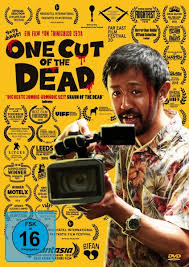
ONE CUT OF THE DEAD/ Kamera o tomeru na!
Japan, 2017, 96 minutes, Colour.
Directed by Shin'ichirô Ueda.
The casual viewer on World Movies, where it was screened for Australian television, might quickly turn off this film, discovering that it was a zombie film, highly exaggerated horror touches, corny acting. Of course, the zombie horror fans and those who enjoy schlock horror movies will continue with glee. The situation gets worse and worse, real zombies arriving, all kinds of chases and terrors, ugly zombies, arms cut off, heads decapitated, the director gone mad, practically everybody taken over until a final rooftop sequence, the lone heroine, the love interest decapitated, the other main character with an axe in her head.
And then the credits start to come up. Will the film to be only half an hour or so?
For those interested in send ups, Mockumentaries, the invitation is to continue watching. The rest of the film, while reprising quite a number of the zombie sequences, is actually about the making of this zombie film for a zombie television channel in Japan. At one stage, the cast discussing the film, it is remarked that this is a zombie films not art!
So, it is enjoyable to watch the production company, their ideas about making the film, just schlock material for the zombie channel audience. So, there are members of the cast, the director, lots of discussions about what should be happening, a reprisal of the earlier scene where the director goes berserk criticising the leading actress.
But also interesting is the way the second part of the film shows the production values, rather minimal, but also the plans for the single shot photographing of the film, the various set-ups, and in fact lots of sequences showing the camera operators and how they worked, how close, had distant, the difficulties in locations – in fact, quite an interesting look in this context of how films are actually shot.
And, congratulations at the end all round on the success of the project.
Obviously, not a must-see, but more interesting look at filmmaking than initially expected.
