Displaying items by tag: Peter Malone's Movie Reviews
Heist Before Christmas, The
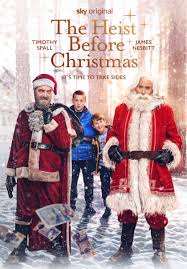
THE HEIST BEFORE CHRISTMAS
UK/Northern Ireland, 2023, 80 mintues, Colour.
Timothy Spall, James Nesbitt, Bamber Todd, Laura Donnelly, Joshua McLees.
Directed by Edward Hall.
Here is a slight and different Christmas film from Northern Ireland. And, it is not necessarily a charming Christmas story.
It opens with a bank robbery by a robber disguised as Santa Claus (James Nesbitt). The focus is on the town, especially young boy, Mikey (Bamber Todd) defying the headmaster, all kinds of mischief, all kinds of bitterness, at home with his single mother and his younger brother, she hard at work to make ends meet.
Mikey realises what has happened, goes in pursuit of the false Santa, discovers an old Santa lyng in the snow, mistaking him for the robber, this Santa being Charlie, a kind old man who imagines himself as Santa Claus and lives in local institution. And is played by Timothy Spall in Norwegian-accented English.
And so, the film moves along, what will Mikey do, can he possibly change, be sympathetic? What about Charlie and his being out there in the snow? And what about the robber, and his tactics to avoid capture?
So, more than a touch of the offbeat, not exactly the nice family Christmas film expected.
- The title, Christmas entertainment? Different?
- From Northern Ireland, the town, homes, shops, banks, the countryside? Carols and the score?
- The edge in Mikey’s behaviour and the possibility of his changing. Different Christmas film? The bank robbery? The bank robber, disguised as centre? Charlie and his dementia and thinking he was centre? The atmosphere in the town, Christmas celebrations, he and his family?
- The picture of the town, homes, shops, offices, the bank, the streets and celebrations, the countryside, the forest, the snow? The car chases and other vehicles? The musical score, Joy to the world?
- The focus on Mikey, his age, his attitudes, causing mischief at school, the reaction of the headmaster, his surliness, defiance, seeing the bank robber and the pursuit, his curiosity, pursuit? At home, his attitude towards his mother, to his brother? Audience response to him?
- The exasperated mother, at home, with the children, Mikey and his attitudes, her eventually slapping him, her upset afterwards? With Joshua, his age, difficulties, the hopes for Christmas, the bike? The poor situation? The mother at work, the boss, her being late, his attitude, her friend? With the customers, the raffle tickets? Joshua wanting the bite? Her changing the bucket of tickets? Not winning the bike, going into the office, discovering the truth, confronting the owner?
- The robber, disguised as centre, the chase to the town, his escape, in the forest? Mikey and his pursuit? Discovering Charlie, the Norwegian accent, talking as if he were centre, dressed as centre, Rudolph’s return…? Mikey returning with the soup, the bank robber, the confrontations, the gun?
- The adventures in the forest, Mikey wanting the money, escaping with Joshua, the continued pursuit? The vehicles? Mikey’s promise? The bag, the money? The slapstick comedy, all the accidents, the fights?
- Back into town, the identity of Charlie, the police, the officer and his laughing at his own jokes, the more sympathetic police officer? Shooting centre? Hospital?
- The pursuits, the climbing, the mother attacking the robber, her fall, the mayhem? Hospital?
- The target audience for this kind of Christmas film? Children? Family? Adults?
Dead Don't Hurt, The
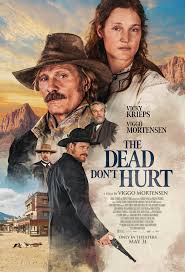
THE DEAD DON'T HURT
US, 2024, 129 minutes, Colour.
Vicki Krieps, Viggo Mortensen, Solly McLeod, Garrett Delahunt,.W. Earl Brown, Danny Huston, Shane Graham, Rafel Plana, Atlas Green, Ray McKinnon.
Directed by Viggo Mortensen.
Now veteran actor, Viggo Mortensen, became a household name when he appeared in the Lord of the Rings trilogy as Aragorn. Mortensen is not only an actor, he is a writer, musician, composer, and has brought all these talents to directing The Dead Don’t Hurt.
In fact, the setting is in the West during the American Civil War. However, the action takes place on the Nevada border and the war itself seems distant. Which means that the film is set in the West, its saloon, gamblers, sheriff, shootouts, but the story is told in such a way that it could take place at any time.
The film opens, significantly because of his title, with a death. There is also a violent shootout in the streets, a court case, a lynching execution. But we have to pay attention because the film moves both forward and with flashbacks, important for the audience to gauge which is which to appreciate the characters and the dramatic development. Sometimes this is something of a challenge.
But, in the flashbacks, we are introduced to Olson, Scandinavian background, arriving in a port, eager to make his way in America. But, the audience has also had a long introduction to a young girl, Vivienne, French background, her father executed by the British, a forthright young girl with an imagination (including a Knight in armour coming to visit her, a scene with which the film opens and will recur). Olson and Vivienne hit it off immediately, some comeuppance to an arrogant young suitor in the town, and they travel to the Nevada border, setting up house, Olson a capable builder, working for some of the money men, profits from gambling, in the local town.
Vivienne is played by Vicki Krieps, the core of the drama and our emotional response.
Audiences need to keep checking on the timespan. After a while, there is a visit and plea from a recruiting agent for serving in the war, Olson, despite Vivienne’s protests, volunteering to go, absent for many years, some letters getting through, some not.
At the dramatic centre of the film is Vivienne’s coping during Olson’s absence, the working in the local bar, hired by the moneyed man, but aggravated by his irresponsible sociopathic son. There are dire consequences for everyone concerned and, gradually, the storytelling arrives back at the violence in the streets, and at the death and dying scene we first saw.
As expected, ultimately, this is also an avenging Western.
The film is intriguing, playing with the audience’s appreciation of characters and story, the interplay and tension between the past and the present – and, with the death, the irony of the title and its implication that The Living Do Hurt.
- The title? Evocative? The opening, Vivienne and her death, the flashbacks, her life and death?
- A variation on Western themes? The era of the Civil War? The Nevada border? Migrants, experiences of war, our, mining, gambling, our in the West?
- The location photography, the beauty, the desert, rivers, ports? The musical score?
- Setting of mood with the opening, the Knight in armour, in Vivienne’s dream, his reappearing during the film, echoes of Joan of Arc, his appearing, reassuring, at her death? Focus on Vivienne’s face, Olsen and his grief?
- The violent episode in the town, at Weston Jeffries, cold, calculating, arrogant, the shootings, the death of Billy? The response of the Mayor, going to the grave, Olsen burying his wife, Vincent present, the story of the violence in the town?
- Court case, the victim for the killings, the religious righteousness of he judge, the woman in the court defiant, guilty verdict, the hanging? Olsen observing and leaving?
- Olsen and Vincent leaving, riding through the countryside?
- Audiences adjusting to the time sequence, the bulk of the film being flashback, the story of Vivienne, French, her parents, the war, her father hanged? In the Port, the relationship with the wealthy man, his treatment of her in the restaurant, her defiance, her attraction to Olsen, talking, going off with him, taking him to the house, the art gallery? Forming a bond?
- Olsen in the town, his background, war? Travelling with Vivienne, the land, setting up, his building talent, working on the other barns? Vivienne upset at first, the flowers and trees, their life together? Her going to work in the bar, the older Jeffries and his power, the discussions with the mayor, the financial deals, the gambling, the adjacent houses, prostitution? The manager of the bar, some integrity? Weston Jeffries in the bar, his arrogance? The violent episode with Weston Jeffries and the piano player, the song, the brutality, commanding him to play? Vivienne and later support of the pianist, his family, the daughter, learning French?
- Olsen, the Civil War, the recruiter in the bar, his deciding to join the Army, Vivienne and her upset, his leaving? Away for so many years, the letters, some received, some not?
- Vivienne, managing, the house, her independence, at the bar? Weston Jeffries following her, her cat in cutting, the violent rape, the aftermath, in the bar?
- Her pregnancy, giving birth, the child, the years passing, the bond between mother and son? Life in the town? Olsen and his eventual return, the important sequence revealing the child, Vivienne quietly spoken, Olsen and his response, leaving, in the river, swimming? His anger at Jeffries?
- The boy, his manner, with Olsen, the acceptance, the building and Olsen showing his son how to hammer? The possible good life?
- The request for Olsen to become sheriff, the discussion with the Mayor, his office? Billy and his delivering the letters, his becoming the assistant? But the audience knowing from the beginning what was to happen?
- Vivienne, illness, syphilis, from Weston Jeffries, the dangers, her death and her vision? The burial?
- Olsen and Vincent, riding, the encounter with Weston Jeffries, the guns, the confrontation, Olsen throwing the knife, overcoming him?
- The story continuing, Olsen and Vincent arriving at the ocean, contemplating the ocean? Sadness, regrets, hopes?
Shakespeare Behind Bars
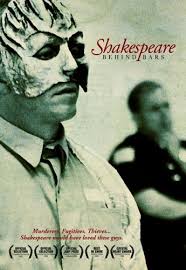
SHAKESPEARE BEHIND BARS
US, 2005, 93 minutes, Colour.
Directed by Hank Rogerson.
This is a documentary well worth seeing. It focuses on prisoners, education, a contribution to rehabilitation, a variation on restorative justice.
In the website of the program, giving the background to this prison work:
Founded in 1995, Shakespeare Behind Bars is one of the longest running, continuously operating, art, theatre, Shakespeare, and original writing prison programs in the US.
Shakespeare Behind Bars currently serves 200 incarcerated adults and juveniles in in twelve SBB programs in three Kentucky adult prisons – Luther Luckett Correctional Complex, Northpoint Training Center, & Southeast State Correctional Complex (virtual program); five Kentucky juvenile detention centers – Breathitt County Juvenile Detention Center Alternative School; Fayette Regional Juvenile Detention Center, Frenchburg Youth Home; Jackson County Youth Center; Warren County Regional Juvenile Detention Center; one Illinois juvenile detention center – Illinois Youth Center – Chicago; two virtual program for returned citizens – Shax BEYOND Bars and Shax BEYOND Bars Writer’s Circle; and one touring returned citizen memoire program – Othello’s Tribunal.
Additionally, Philomath Films and Shakespeare Behind Bars are filming a second documentary – Shakespeare BEYOND Bars.
Since 1995, Shakespeare Behind Bars has offered theatrical encounters with personal and social issues to incarcerated, post-incarcerated, and at-risk communities, allowing them to develop life skills that will ensure their successful integration into society. The youth and adults we serve experience a powerful personal transformation as a result, building life skills, emotional intelligence and coping strategies essential to successfully re-integrate into society.
In this film, the prisoners are auditioning for, training for, rehearsing, performing Shakespeare’s The Tempest. They have a performing space, a director coming from outside who has experience in working with prisoners, a talent for drama, for training in rehearsing, for affirming the performances.
In the meantime, and throughout the film, there are quite a number of scenes of the prison, its environment, the landscapes outside, the buildings inside, the vast spaces.
Quite a number of the prisoners are interested in performance, learn their lines, are coached in recitation, a strong emphasis on individual words and their meaning as well as the rhythms, extensive scenes from The Tempest.
And, the prisoners themselves. Most present themselves initially as friendly. The Dir is able to draw from them their own stories, the crimes, their sentences, possibilities for parole or not. And there are their regrets. So many of the crimes are physical violence against women. In performing and in giving interviews, there are some opportunities for the prisoners to acknowledge the truth about themselves and the consequences of their actions.
The audience gets to know some of the performers very well as well as commentary by the director.
The film offers an opportunity for the wider audience to understand something of this kind of prison rehabilitation and education, an opportunity to listen to the stories of the prisoners, to appreciate the impact of the long sentences and the desire for parole, and all in the context Shakespeare’s characters, his final play, and the social issues that the play brings up, the character of Prospero, Miranda, the rivalries, the politics, Caliban, Ariel and the touch of the supernatural.
Code of the Freaks
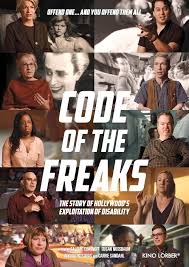
CODE OF THE FREAKS
US, 2020, 68 minutes, Colour.
Directed by Salome Chasnoff.
This is a documentary well worth seeing raising quite a number of questions. As the title indicates, it is a focus on the portrayals of, broadly speaking, disabled persons in feature films over the decades.
It takes its opening from the 1935 Todd Browning film, Freaks, with some lengthy clips from the film, making visual impact on the documentary’s audience. In fact, throughout the film, though brief running time, there is an abundance of clips from a wide variety of feature films, but especially from English-language films. Fortunately, the title of each film appears in the top left-hand corner so that audiences can identify the films, and identify whether they have seen the films or not.
Significantly, there are a number of experts speaking to camera. There is also a wide variety, more women than men commenting, many of the commentators disabled; especially strong is a dwarf woman who engages the audience to listen to her points of view, with touches of humour. There is also the British actor, Matt Fraser (who appeared in such series as The Sister Boniface Mysteries). There are quite a number of other commentators, especially film critics, strong points of view vigorously put forward.
Some of the issues raised for audience consideration include performances by actors as physically and mentally disabled, strong attention given to Daniel Day Lewis in My Left Foot, Dustin Hoffman in Rain Man, Eddie Redmayne as Stephen Hawkings. (And, at the end, there is a collage of Oscar awards to actors portraying the disabled, with extensive than we might have anticipated.)
One of the issues raised is the disabled, sexuality, visual portrayals, reticence, challenging the audiences to think of disabled and their humanity, even with limitations from their disabilities.
Also considered at some length is the issue of cure, hope for cure, and how realistic this is/ and not.
And another consideration is that of the inspiration afforded by the struggle of the disabled, the contribution by their carers and mentors, a focus on such films as The Miracle Worker and the story of Helen Keller.
Audiences will not agree with every statement put forward by the commentators which, as has been mentioned, they put forward with great vigour and intensity.
The film would have been highly enhanced had there been interviews with dwarf actor, Warwick Davis, and, most especially, an actor who has achieved extraordinarily over two decades in all kinds of roles, a discussion with Peter Dinklage.
Kill/ India
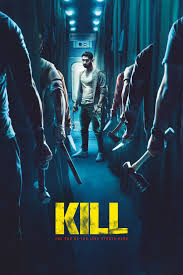
KILL
India, 2023, 105 minutes, Colour.
Lakshaya, Raghav Juyal.
Directed by Nikhil Nagesh Bhat.
A 2020s Indian action thriller which was very successful at the box office and the rights sold for an American remake.
Audiences interested in Indian Cinema but not having an extensive background, perhaps limited to Bollywood style dramas, romances and musicals, the more serious dramas Bangor watch and I, this is an example of the popularity of aggressive action dramas, fighting heroics, violence, some brutality, an increasing intensity moving towards going over the top. And, it has an accessible 105 minutes running time rather than the more lengthy running times of Indian films.
Basically, this is the story of a train journey, a wedding party on the train, the background of the hero and his attraction to a woman who has been pressed into a forced and arranged marriage. He is military trained, as a military friend on the train.
The screenplay also focuses on a young man, scouting for the train, in contact with his father, looking patriarchal but a fierce leader as it turns out, violent, who has a huge team of bandits who eventually attack and board the train.
There are scenes of the robbing of the passengers. There is the closing of each carriage of the train, especially the trapping of the bridal party. The motivation of the bandits his fears, the leader is often angry with his moody and aggressive son, the son actually killing the bride halfway through the film, and the tension then building up, the hero out to avenge the death, to rescue the bright sister, no holds barred.
The fights are deliberately choreographed, given the confines of the compartments and corridors on the train, but with some action on the roof, and one held out from the carriage. And the weapons are physical, knives and sharp equipment rather than guns.
The cumulative effect of the experience is quite bloody, calculated for eager fans. With the audience can identify with the hero, especially working with his friend who is often wounded and becomes the target of the bandits, the villain is completely unlikable (even to his father eventually).
Indian action filmmaking.
Memory/ 2023
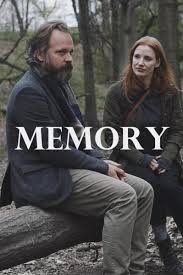
MEMORY
US, 2024, 103 minutes, Colour.
Jessica Chastain, Peter Sarsgaard, Merritt Weaver, Brooke Timber, Josh Charles, Jessica Harper.
Directed by Michel Franco.
Memory is a powerful human gift, the past to be re-lived. Some great happiness, some regrets and sadness. But, memories are elusive. They come. They go. They fade. And they can become entangled.
Here is a strong human drama where memory and loss of memory play an important role. We are first introduced to Sylvia, the always reliable Jessica Chastain, some extreme close-ups of members of an AA group giving their testimony, and praising Sylvia for 13 years of being clean, sober.
Sylvia is a single mother, her teenage daughter, living at home, and Sylvia working at a centre for the disabled. She has a bond with her younger sister. But she has a loathing and hatred for her mother. One night, she is rather unwillingly present at a high school reunion and a man comes and sits next to her, saying nothing. She leaves. He follows. He camps outside her house for the night.
In fact, he is Saul, Peter Starsky and winning best actor award for this performance and the 2024 Venice film Festival. He suffers from incipient dementia which is gradually taking over.
While the film shows us the growing rapport between Sylvia and Saul, not always easy, we discover more about their memories and his loss of memory. Saul is cared for by his strict and protective brother, Isaac (Josh Charles), who realises that Saul can depend on Sylvia and employs her as Saul’s carer. A positive part of the good bonding with Saul is Sylvia’s daughter and her support of him, a friendship.
But, Sylvia had remembered something about Saul, an assault in high school days, which proves to be a false memory, timing not correct. We see Sylvia going back into her memories, especially of her relationship with her father, and the animosity towards her mother (Jessica Harper) who is wanting to bond with her granddaughter still clashing with Sylvia.
There is some intensity in this exploration of memories, of false memories, often covering memories, and characters who are unwilling to remember or suppress memories.
But, in exploring human nature, Mexican writer-director, Michel Franco, offers and option for hope, for good relationships, and for some healing of memories even if, for Saul, they continue to recede.
- The title, not appearing until the end? The role of memory, loss of memory, opening up of memories, false memories?
- New York settings, neighbourhoods, streets, homes, interiors, meeting places, shelters, subway stations? The musical score? The repetition of A Whiter Shade of Pale? Its significance for Saul? Listening to it over and over? The final credits?
- The introduction setting the tone, the extreme close-ups of the members of the AA group, their testimonies, the revelations, problems?
- The focus on Sylvia, 13 years, the sponsor, the congratulations? Sylvia at work, the shelter, the various characters, chatting, serving the food? Her home life, her daughter, Anna, at the meeting, supporting her mother? Their going to school together? Scenes at home? Sylvia, absent husband and father, her hatred of her mother, the reasons? Protective of her daughter?
- Olivia, younger sister, memories of the past, support, tensions between them, Olivia’s family, the visit, the children asking very direct questions, the reaction of their father, issues of addiction, of sexual abuse, his closing the conversation? Olivia support of Sylvia at work?
- The college reunion, the celebrations, Sylvia deciding to leave, Saul sitting next to her, his following her, the streets, subway, the train, outside her house, in the rain? Her coming out in the morning, his identity, the phone calls, being collected?
- Saul, age, personality, dementia, under the care of Isaac, Isaac’s daughter, the decision to ask Sylvia to care for him? Her agreeing? The offer of the money?
- The film exploring the growing relationship between Saul and Sylvia, at his home, the care, the conversations, the walk in the park, her accusing him of abuse, the later information about dates and her false accusation, her wrong memories? Taking his identity card, returning it, his being abandoned?
- The details of the friendship, the talking, the reality of the dementia, his taking notes, the outings, the restaurant and his remembering the food but not the staff, his brother blocking his credit card? At home with Anna, playing the games? The bonding?
- Isaac, his disapproval, angers, stopping the credit card? Firing Sylvia, the new Guardian?
- Saul and his defiance, his going home with Sylvia, their meeting at the shelter, going outside, the bench, the kissing? Staying at home in Anna’s room, his collapsing in the bathroom, the sexual encounters? The consequences?
- Sylvia’s mother, living in Florida, her social charity work, wealth, coming to New York, the encounter with Anna, talking, with Olivia and the family? Sylvia arriving, confronting her mother, expressing her hatred? The tangling of the memories, Sylvia and the relationship with her father, in the room watching television, Olivia reticent, the accusations against their mother, her knowing what was happening?
- The effect of the meeting with her mother on Sylvia, Olivia coming to see her, the untangling of the past memories, their father?
- Anna visiting the house, the new Guardian, taking Saul in the train, bringing home, the reuniting with Sylvia? A future?
- The exploration of sexual abuse and the consequences, memories, hidden and overt, erroneous? Consequences? Parental control and loss of control? Issues of addiction? The final visit to the AA meeting and the declaration of the prayer? Mental illness and conditions? Support, empathy, a future?
Merry Gentlemen, The

THE MERRY GENTLEMEN
US, 2024, 87 minutes, Colour.
Britt Robertson, Chad Michael Murray, Marla Sokolof, Marc Anthony Samuel, Colt Prattes, Hector David Jr, Maxwell Caulfield, Michael Gross, Beth Broderick.
Directed by Peter Sullivan.
Another Christmas film, the putting on a show, the show must go on.
However, the show the goes on is a male dancing revue in a small American town (God bless you, Merry Gentleman!). And, for Christmas reassurance, while the innuendo is obviously there as well as the shirtless male dancers, this is very much a PG version of Magic Mike or the Chippendales.
The initial focus is on Ashley (Britt Robertson) very happy in fulfilling her childhood dreams as part of the chorus as the Jingle Belles on Broadway. She slips, is to be replaced, returns home to her parents and their small club which used to be famous in the past but is r now in trouble,unning at a loss.
The situations are obviously contrived but audiences will probably go along with all of this. She encounters Luke, Chad Michael Murray, big and strong, doing repairs, their sparking badly off each other (initially, of course). And then there is the businesswoman who threatens them with closure until they pay $30,000. Ashley’s sister, Marie (Marla Sokolof who co-wrote the screenplay), a restaurant, her partner – and, eventually, another worker and a local taxi driver will join the troupe.
A few hiccups in the preparation but the men respond extraordinarily quickly to the choreography, the gyrations, the removal of shirts (and nothing more than shirts).
Needless to say but saying it, Ashley and Luke hit it off, the act is a success, there is a moment of injury but the local old man, played by Maxwell Caulfield (remembering Grease 2) who sits at the club doing crosswords, is able to join in and the show goes on, more and more customers, more and more income, the financial adviser joining in the exuberance, money paid.
But there is one hitch, the phone call for Ashley to come back to Broadway because the ingenue cannot deal with the pressure, Ashley’s packing to go, her father urging her on, her life’s ambitions, Luke and the others upset, his being unable to perform well – the plane delayed, Ashley returning and… We know the rest.
Pool, The
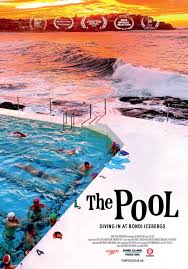
THE POOL
Australia, 2024, 95 minutes, Colour.
Directed by Ian Darling.
This is a cinema essay/poem rather than a narrative about the Icebergs Pool at Bondi Beach, Sydney. In fact, at the end, there is information that this is the most filmed and photographed pool in the world.
For audiences who enjoy beautiful and skilful photography, this is their kind of film. For audiences who need some kind of ongoing narrative to keep their attention and provide some continuity, they will have to rely on some of the stories that swimmers at the pool tell, moments of narrative.
In fact, the film does not give much background to the origins of the pool, except that it opened in 1929 and has been popular ever since. There are statistics given of how many people swim at the pool each year.
On the one hand, the film is a masterclass in cinematography, in editing. There are beautiful scenes of the weather, the sky at dawn, the expanses of the beach and the ocean, the crashing of waves over the pool, vistas of Bondi beach and its background. On the other hand, there is a focus on so many of the men and women, mainly older, and their devotion to the pool, the long years of coming, some even five days a week early in the morning, the regimes, the benefits, the friendships, and the beer drinking at the end of the day.
In fact, the comments of so many of the older men and women are an exhortation to good health and exercise and audiences seeing the benefit.
The population that goes to the pool in the 2020s is significantly white, glimpses of some other participants from Asia and other cultures. In fact, it is often a blokey culture at the pool, especially the men friends over the years, but an equalising of executives with workers the same in their swimming gear. But, there are many women, an increasing number.
Life at the pool is very much controlled by the staff, the importance of racing, the importance of training, the visualising of the various races, the laps, the timing, the qualifications.
Which means then that this is a social document, as mentioned also a cinema poem, reminder of the beach culture of Australia, of Sydney and especially the status of Bondi Beach.
Best to quote some of the statement by the director, Ian Darling.
We set out to make a beautifully cinematic film, where every shot is a stunning portrait and a pleasure to watch. The filmmaking process opened our eyes to the raw beauty of the place, and how the smallest detail; a random wave, a spectacular sunrise, a massive storm, a perfect dive, an individual swimming stroke, the challenge of cold water, the fear of swimming, the healing powers of the water could help us create a story measured and told by the sum of the parts. Making this film also opened our eyes to the incredible cast of characters who populate this place. We didn’t want to make a traditional film where we followed a limited number of people in detail, rather we wanted to gain snippets from many characters who call the pool their home. But more than anything we wanted to make a film where there was just one central character. The pool itself. It just happened to have lots of arms and legs, and an endless well of stories to tell.
This is a time for gentle, poetic, meditative films to also find a place in the canon. We will always need documentaries that highlight injustice, human rights abuses, environmental destruction, and a myriad of other problems. But sometimes we need films that make us feel good about being human again too, and, perhaps, never more than now.
Red One

RED ONE
US, 2024, 125 minutes, Colour.
Dwayne Johnson, Chris Evans, Lucy Liu, J.K.Simmons, Bonnie Hunt, Kristofer Hivju, Kiernan Shipka.
Directed by Jake Kasdan.
Most films about Santa Claus require quite a suspension of disbelief - except for the littlies. But, this one even more disbelief than usual for those who say they don’t believe in Santa Claus. Most of us!
Santa, the Red One, though initially seen enjoying himself meeting all the children at a Philadelphia shopping mall, is suddenly whisked away in a super-powered sleigh, the sturdiest reindeers you have seen, to an extraordinary mythological North Pole, then the victim of a vast conspiracy, his abduction, an evil which determined to take his place on Christmas Eve rounds and imprisoning forever those on the “Naughty List”!
Not exactly the scenario we might have been expecting for Dwayne Johnson and Chris Evans.
This is a piece of Christmas entertainment for older children (of whatever age!). The mythological story of the abduction, draining Santa Claus of his energies, the manufacturing of imprisoning it globes to be distributed on Christmas Eve to trap those naughty, is played out as the equivalent of a high-powered action show. Plenty of action – but always with its heart in the right place but not necessarily all those fighting fists.
Dwayne Johnson is obviously enjoying himself as Cal, Santa’s long time bodyguard, for several centuries, in fact. And, J.K.Simmons as Santa is enjoying himself even more. He even has bodybuilding sessions at the gym with Dwayne Johnson. As for Chris Evans, we don’t like him at the start, arrogant, mean minded (even snatching a lollipop from a baby in a pram). He has all kinds of tech skills, he is hired out to break into high-class systems, enabling the witch to abduct Santa. And he has a young son who rather idolises him but is disappointed in him.
In fact, there are quite a lot of pauses in the film for Dwayne Johnson to give moralising lessons for the young audience, basically to be good.
So, lots of fantasy, lots of action sequences, particularly enjoyable are those where Cal’s powers enable him to go into miniature form at a moments notice and then reverse, very handy for battling and tricking hefty opponents.
Lucy Liu appears as the director for mythological operations. There is also the Krampus and his ogre-like warriors, Mrs Claus (Bonnie Hunt) a range of elves and a huge benign polar bear key staff-member at the North Pole.
Director, Jake Kasdan, has made the Jumanji films so he is at home with fantasy blends of realism and imagination. Audiences seem to be enjoying the red One – and best to avoid reading reviews by critics who think that this kind of thing is beneath them!
- Red One, code for Santa Claus?
- The tone of the film? Christmas film? Santa Claus film? Variations on the theme? Not for the youngest audiences, four boys, for children (of all age)?
- Audience suspension of disbelief, belief in Santa Claus, Christmas Eve, the North Pole preparing all the gifts, travelling around the world, the deliveries, happy children? Variations on this theme?
- The opening, the children, the gifts, Jack as very sceptical – and audiences discovering at the end that the young sceptical Jack was the older Jack of the action?
- Santa Claus, at the mall, enjoying talking with the children, his personality, Cal present as his bodyguard, the intrusive man, the children waiting? Santa, ready to go to the North Pole, the reindeer and their size, the super sleigh, moving through space and time? The dome at the North Pole?
- Expectations of life at the North Pole, the elves, the polar bear, Santa Claus’s wife, the preparation of the gifts, almost Christmas Eve? Santa, going to the gym, exercise, push-ups, weights… Cal retiring?
- The witch, her pleasant appearance, her ugly appearance, her henchmen, her plan, abducting Santa, the deception of the break and the dome, keeping him at the North Pole, draining his energy? Her work, creating the globes, their finally worked in, miniaturising and capturing people? The intention to rid the world of naughty children, imprisoning them? Creating a better world?
- The introduction to Jack, his age, careless, his skills, supervision, taking the lollipop from the baby, visiting his son, the complaint of his wife, phone calls, to take him to meetings? His age, devotion to his father, the disappointments?
- Cal, the experience of the abduction, Zoe, her being in charge, the various meetings, the plans, the ruining of Christmas?
- Cal, his personality, the guard for centuries, putting in his letter of resignation, becoming involved, tracking down Jack, the interchanges, hearing about Jack’s son? Knowledge of the witch, Jack identifying the contacts for the plan, going to the resort, the interrogation of the contact, his fears, the arrival of the monsters, icy, transforming others into ice? The humour of the fight sequences, Cal and his being miniaturised? The toy cars and other aspects of the shop, from miniature to full-size, driving away?
- The visit to Germany, the Krampus, Santa Claus’ brother, the revolt, the ogres, the fight sequences in the slaps? Jack and Cal escaping?
- Going to the North Pole, the buildup to the confrontation, the witch and her success, the mass production of the globes, trapping both Jack and Dylan? The talk, Jack being good and kind, the breaking of the glass?
- The witch, preparing all the globes, the sleigh, getting ready to go?
- The arrival of the Krampus, the witch his ex-wife, his decision to be on the side of good?
- The fights, the sabotage of the sleigh, the breaking of the globes? Confrontation with the large witch, miniature fight? Her being imprisoned in a globe?
- Finding Santa, resuscitating him, going on his rounds, the speed and the possibility of delivering all the gifts everywhere in the world on the one night!
- Jack, the bonding with his son, and the revelation of the sceptical young Jack? Cal and his decision to stay on guard in Santa Claus?
Kiss Me, Kate - the Musical
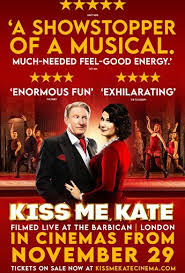
KISS ME, KATE, The Musical
UK, 2024, 160 minutes (15 minutes intermission), Colour.
Adrian Dunbar, Stephanie J Block, Charlie Stamp, Georgina Onaurahm John Stacy, Nigel Lindsay, Hammad Animashaun, Peter Davison.
Directed by Bartlett Sher.
Kiss Me, Kate is a 1948 Broadway musical, book by Sam and Bella Spewak, music by Cole Porter. It was successful on Broadway, made into a lavish in MGM feature film with Kathryn Grayson, Howard Keel, Ann Miller, and an introduction to Bob Fosse and Carol Chaney and Fosse’s choreographic style.
This version is staged in London’s Barbican theatre.
The stage is very adaptable, movable, at times backstage of the theatre where Shakespeare’s The Taming of the Shrew is being performed, sometimes the dressing rooms, sometimes the outside, and sometimes the stage itself for the Shakespearean performance. Which means that the costumes move from 1948 style to period costumes.
This version does have some reservations about the male chauvinism of the central character, a speech by Adrian Dunbar as the lead and the of director The Taming of the Shrew, highlighting more contemporary issues of feminism, women’s rights, misogyny… The audience is asked to accept these perspectives in Shakespeare’s play.
There is some parallel of Shakespeare’s play in the relationship between the leading actor and the leading actress, formerly married, divorced, she engaged to a high-powered military presence at the White House, even taking a phone call from the President. She is played by Broadway star, Stephanie J.Block. It is a surprise to find dramatic actor on screen and television, Irish Adrian Dunbar, as the director. She has a strong stage voice, his rather more subdued, pleasant.
There is a strong supporting cast of singers and dancers and, at times, some lively choreography, especially with the ensemble joining in Its Too Darn Hot. Audiences familiar with the play and the film version will be looking forward to the renditions of the various songs and the choreography. The basic plot about the divorce, the reunion on stage, the engagement, a final reconciliation seeming rather slight in comparison.
Which means that the Cole Porter music and lyrics are what is important. The central song is So in Love, sung by both leads. The actress playing the younger sister, Bianca, has the showstopper of Faithful in my Fashion. The lead has The life I Lately Led. The actress has I Hate Men. And there is the jaunty introduction to the play on tour, We open in Venice…
But, as in the film, so much of the show is stolen by the two supporting actors playing the gangsters who have to keep an eye on the lead because one of the lesser actors has signed his name for a betting loan. They have their guns, create some mayhem on stage and behind the scenes but, ultimately, have their song, Brush Up your Shakespeare, with its jaunty tune, its amusing lyrics and plays on Shakespeare’s titles and characters (and rhymes), even getting the audience to join in.
Kiss Me, Kate has its high moments and its rather more ordinary moments, so, something of a mixed classic.
