Displaying items by tag: Peter Malone's Movie Reviews
Fourmi/ Ol Love and Lies
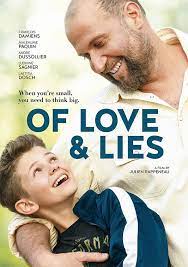
OF LOVE AND LIES/ FOURMI
France, 2019, 105 minutes, Colour.
François Damiens, Maleaume Paquin, Andre Dussollier, Ludivine Sagnier, Laetitia Dosch, Pierre Gomme.
Directed by Julien Rappeneau.
It is being complimentary, but it must be said that this is very nice film. It is the equivalent of a fairytale in contemporary life. And the focus is football.
We visit a small French town, especially the local football team for young boys, the sympathetic coach (veteran Andre Dussollier), the President of the club, sponsors, and the initial match where a young boy, Theo (a very engaging Maleaume Paquin), small but very effective during the play. And there are some scouts for British club, Arsenal, who have a talk with Theo praising him but saying he is too short to be recruited.
But, of course, all the adults assume that he is being recruited and are delighted. Theo hasn’t the heart to tell the truth, especially to tell his very boisterous, intruding on the field, erratic father, an alcoholic (a lively, sympathetic performance by Francois Damiens). His parents separated, his mother with her stepfather whom Theo does not relate well with. He wants to live with his father – and this gives the opportunity, his father eager to prepare him for going to England, eager to go with his son. So, plenty of room for comedy of errors.
Theo has some good friends in the town, confiding in one, but generally keeping his secret. But he does go to an eccentric friend, Max, an IT expert, who is able to manipulate emails allegedly from Arsenal, reports, results of interviews…
It all goes well enough for Theo except the burden of his not telling the truth. Ultimately, the truth will out. The scout comes back to watch the boys playing, the dismay of everyone concerned, the club president and his appeal for sponsors because of Theo’s talent, the coach and his assistant, but, especially, Theo’s father who has been helped by a busy social worker and has stopped drinking, but falls off the wagon, involved in a fight.
The friends help in their way, his father gives a lot of thought to the situation and meets his son, urging him to come back and play and the local club match – where, as in all good fairytales, Theo is able to kick a winning goal. And an invitation from Arsenal.
Plenty of happiness despite the deception – and a touch of tears.
- A contemporary fairytale? In real life? In wishful hoping?
- The setting, the French town, homes, school, football clubs, restaurants, social work? The football games? The musical score?
- Theo’s story, his age, his parents, the break, his alcoholic father, his devotion to him, his mother, marrying again, not liking his stepfather? His skill at football? Claude as coach, other members of the club, the boys? His skills? The talent scout for Arsenal, noting him, the conversation? Everybody assuming that he was chosen? His not wanting to disappoint his father? The love and the lies?
- The portrait of the Father, background, love for his son, separation, interactions with his wife, meetings with his son, their sharing, talking, the son wanting to live with him? His son wanting to please him? His enthusiasm, at the football matches, shouting and intruding, being barred? His zest with his son’s success, friends, drinking?
- Theo and his mother, the discussion with his stepfather and his firm stance?
- The social worker, her job, harassed, with Laurent, the discussions, her interventions, his pleading about court orders, the visits, the friendship, her exasperation, being fired?
- Theo and his friends, confiding in each other, the issue is not telling the truth? His friendship with Max, Max and his IT abilities, his interventions, rerouting letters, interviews…?
- Theo, his life, the discovery of the truth, the effect on everyone, his father and his disappointment, drinking, his parents, the friends, Romane and her disappointment? Staying by himself, not coming to the match, Claude and his support?
- His father searching for him, Romane and her help, their talk, his return to the match, the skills?
- The fairytale aspects, Max and his interventions, the talent scout coming again, talking, the Theo had grown taller, the contract? The happy ending?
- His father content, his mother going to England with Theo, hopes for the future?
Patient Zero/ 2018
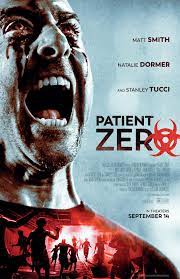
PATIENT ZERO
UK, 2018, 93 minutes, Colour.
Matt Smith, Stanley Tucci, Natalie Dormer, Clive Standen, Agyness Deyn.
Directed by Stefan Ruzowitzky.
The term Patient Zero emerged during the 1980s in the context of AIDS and the search for the origin of the spread of AIDS in North America. Which means that this title is initially misleading.
This time there is a world plague situation, originating in America’s midwest, a plague of rabies, the film initially indicating billions being infected. There is a parallel to the zombie infestation. However, the infection turns the humans into angry creatures, but still with their memories, able to communicate.
This is a British production, filmed in London, with a mainly British cast, but (perhaps for the wider American audience) set in the United States, with lead Matt Smith having to use an American accent.
While there are scenes of mayhem, crowd scenes, individual scenes, the rabid victims biting and infecting others, much of the action takes place in special and secret laboratories, militarily guarded, where doctors try to find an antidote. In charge is Dr Rose, played by Natalie Dormer. But the authorities are relying on the skills of Morgan, played by Matt Smith, who has been bitten but has not been infected to his detriment. He interrogates those infected, trying to find out where they came from, locating patient zero. He himself is sometimes angry and the interrogations, confronting the angers of the victims, playing music which torments them, erratic in his confrontations.
There are members of the staff, one cheerful member being bitten and having to be shot. The military official clashes with Dr Rose, eager to shoot those infected than help with any investigations.
At the centre of the investigation is the Professor, played by Stanley Tucci. He is not like the others, is not tormented by the music, and, while disfigured in his face, is able to explain his memories, philosophise about the nature of raging humanity, tell the story of his infection and his killing of his wife and daughter. He turns the tables on Morgan by explaining that those infected are looking to him as Patient Zero for their future.
There is some final mayhem, an escape sequence, Morgan helped by his infected wife who sacrifices herself – but, there is no definitive ending, all open-ended.
- A plague film? Rabies infection? Human transformation, rage? The parallel with the zombies?
- The American setting, yet a British production, the cast, Matt Smith and American accent? Credibility?
- The situation, the explanation, the search for an antidote, the search for patient zero to help determine the antidote? The isolation, the laboratories, protection, armed guards, the cages?
- The background, scenes of infection, mass scenes and rage, individuals in the cage, the treatment, communication with them, the physical effects, psychological effects, the torment of the music? The attacks, the biting, the military and the shootings?
- Morgan, his being bitten, not infected, his abilities with those infected, communicating with them, treatment, tactics, stand over tactics? The issue of his wife, in the cage, his love, support? His working with Dr Rose, collaboration, the sexual encounter, consequences?
- The attitude of the military, the commander and orders, Knox, brutal, confrontations with Dr Rose, the infection of the genial worker, the effect, seemingly saved, the break out, his being shot?
- The range of those interrogated, the past, their lives, explanations, attitudes?
- The professor, his personality, arrogance, the flashbacks to his life, the lectures, the phone call, the outbreak, the students, the attack on him, returning home, his wife reassured, finding the blood, his attack on her, his daughter, killing his family?
- His cold presence in the laboratory, the interrogations, his philosophising, about human nature, rage? His declaration that Morgan was really Patient Zero because he had survived despite the infection, and that those infected were looking to him to change them for the future?
- The confrontation with the professor, his death?
- The attack, Morgan and his decisions, Knox killed by Dr Rose, taking his wife, the warnings, his wife sacrificing herself? The escape with Dr Rose?
- The unfinished ending? Speculation as to the future of the human race?
Summer Days, Summer Nights/ Summertime
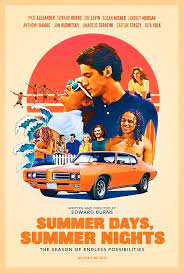
SUMMER DAYS, SUMMER NIGHTS/SUMMERTIME
US, 2018, 123 minutes, Colour.
Pico Alexander, Lindsay Morgan, Anthony Ramos, Amadeus Serafini, Caitlin Stasey, Rita Volk, Edward Burns, Zoe Levin.
Directed by Edward Burns.
For more than two decades, Edward Burns has contributed very personalised films, perspectives on ordinary American life (although opening up at times to a wider world, New York gangster world, for instance, Ash Wednesday). But, mostly, he focuses on families, family relationships, joy, tensions. And this is the case here.
We are in Long Island, Memorial Day, 1982, an opening which introduces us to a wide range of characters, lay teenagers, finishing high school, working for the summer, prospects for the future. No one really emerges as the centre except for JJ Flynn, played by Pico Alexander. He is an anchor with his own story, relationships, uncertainties, and his relationship with his father, played by Edward Burns.
Also in the cast is Anthony Ramos in an early role, later to emerge with In the Heights and Transformers, Rise of the Beast.
Very American, perhaps too American for wider audiences but eliciting some memories of now long ago decades.
- Memories of the 1980s? Summer? Memorial Day?
- Location, the town, the beach, homes, clubs, bars? The range of the musical score and memories of the 1980s?
- The films of Edward Burns, writing, directing, performing? Over decades, his porter of people, families, New York?
- The introduction, the range of characters, their age, high school, prospects, summer behaviour, relationships, questions? The teenage generation? The parent generation?
- The characters:
JJ, age, high school, leaving, prospects, meeting girls, the rich girlfriend, his other friends, confiding, talking, testing? His work, relationship with his father? Father’s advice?
Terry, the summer, music, composing, relationships, older?
Susie, personality, returning, relationship with Frankie, his relationships? Ups and downs and the relationship?
Miller, Lydia, outgoing, advice?
Debbie, relationship with Terry?
- The forthrightness of each of the characters, their emotions, on their sleeves, expressing them, audience sympathy, with younger audiences, with the parent generation? On older audiences looking back with memories?
- Work during the day, encounters, sexual relationships, tentative, forthright, exposing personalities, strengths, limitations? The block party? The fireworks?
- Edward Burns and his contribution to perspectives of Americana?
Mama's Boy
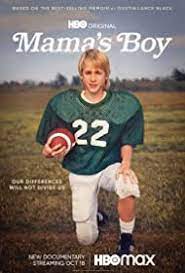
MAMA’S BOY
US, 2022, 102 minutes, Colour.
Dustin Lance Black and family.
Directed by Laurent Bouzereau.
This is an interesting, often arresting, documentary portrait of a family based on the novel, Mama’s Boy: A Story of Our Americas, written by Dustin Lance Black. And he has written the screenplay for this documentary which has been directed by prolific director documentaries and short films, Laurent Bouzereau. It is a film with many significant themes dramatised and explored throughout.
The film opens with Dustin Lance Black receiving an Oscar for his screenplay for the 2008 film, Milk, based on the life, work and assassination of San Francisco representative, Harvey Milk. Black gives a rather impassioned speech to encourage, especially young gay men, of changes in American consciousness and legislation. Which establishes him and his cinema work, and introduces him as the host of this documentary, a personable host, articulate, earnest and committed.
However, the first 25 minutes of the film focuses on Black’s mother, Rosanna, called Anne, the poor background of the family in Louisiana, going back to the early 20th century, her birth in 1948, the period of the prevailing of polio and her life with polio, doctors pessimistic about her survival, yet her showing enormous determination, her energy to walk again with splints and crutches, difficulties with family in accepting her condition, but her decision to study, get a scholarship, study medicine. And there is a lot of film footage of her as well as the comments by Black himself. She was also warned against marriage because having a child would kill her – but, she married, and had three children. She was encouraged by the Church of Latter Day Saints, devoted and devout, and their guidance in recommending two husbands (one who eventually abandoned his wife and three children, the other sadistically brutal).
Anne is seen throughout the film, eventually marrying a supportive husband, also interviewed throughout the film, and working for the American military the decades in medical laboratories.
This aspect of the film is significant, an opportunity to appreciate the impact of polio in the early 20th century, the importance of Jonas Salk and his discoveries, but the consequences on those who contracted the disease.
Another important aspect of the film is domestic violence, Lance Black calmly but emotionally recounting his experience of his father, the next step father and his even murderous violence. Not only the effect on Anne, but on the three children.
The film was also interesting on the theme of family, the eldest son, Marcus, joining gangs, drugs, drifting, and, rather later in life, coming out as gay, an up-and-down life, dying before his mother. The younger son, Todd, interviewed throughout the film giving a further perspective on the stepfathers and his mother, his support of the family, marrying and having his own family.
And, throughout the film, there is the theme of sexual orientation, public attitudes in the American south, Lance Black aware of his orientation but suppressing it for a long time. There is an interview with a close friend who was very supportive, and still is, as well as his partner, British athlete, Tom Daley, whom he married in 2017.
While he worked in Hollywood on television projects on short films, invited to make the film, Pedro, about a gay athlete, he achieved success with his screenplay for Milk, going on to write other screenplays including J.Edgar,
But, urged on by his mother who was initially shocked by the thought of his orientation but who came to visit him in Los Angeles and listen to the stories of his friends, he became an advocate from 2009 onwards for LGBTQI+ causes, combating propositions against same-sex marriage, a great deal of writing and public speaking, and the change of attitudes over the years and changes in legislation.
As she was dying, Anne urged her son to fight for her life. He was puzzled by what she meant – but, in writing his book and in making this film, he has definitely fought successfully for his mother’s life.
Kairos/ Australia
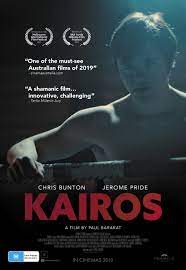
KAIROS
Australia, 2019, 89 minutes, Colour.
Chris Bunton, Jerome Pride, Digby Webster, Deborah Jones, Audrey O'Connor, Jaden Byrne.
Directed by Paul Barakat.
Kairos comes from the Greek, the contrast between chronological time and the special time, the special occasion and opportunity in a person’s life, moment of grace. This is explained by the teacher to his class, urging them to dream.
This is a small-budget film from Sydney, with a Down Syndrome actor, Chris Bunton, in the lead, a young man, Danny. But himself is also a special Olympics champion and studied for five years at NIDA. He is a persuasive screen presence, seen at home with another Down Syndrome friend, fostered by a sympathetic former nurse, played by Deborah Jones. He attends a special class, education, imagination, ideas, lectures and explanations, and imaginative exercises, blindfold, listening to music (many of which are visualised here, especially with Danny wanting to be more normal, like a French boxer). There are scenes between him and the Down Syndrome friend, Ellie.
Danny is a successful gymnast but is interested in boxing. He is encouraged by John (Jerome Pride) who runs the gym. Not everybody is enthusiastic for Danny to be a boxer – and there is a crisis when he punches John while sparring, knocking him out, knocking out his teeth. Danny keeps it secret and broods. John says he fell off a ladder. This creates friction between the two.
John’s story and his family is also filled in, tragic background in England, coming to Australia.
Ultimately, the secret is out, consequences for the friendship, consequences for Danny’s ambitions, complicated by his experiences of blindfold and imagination. While Danny continues to bond with Ellie, he returns to gymnastics but the final image of the film, an empty feeling, is Danny coming down from the rungs and the two just left hanging, empty.
- The meaning of the title? Chronological time, special opportunity time?
- The focus on Down Syndrome, Danny, Sam, Ellie, the various members of the group? Featuring Down Syndrome actors, pride and achievement, reaction of the public, reactions, underlying anger?
- The Sydney setting, the city, homes, the gym, the classroom, buses and trains, dentists…? Authentic feel? The musical score?
- Danny’s story, his age, Jude and the story of his birth, the birth mother, Jude and her care for Danny, fostering, over the years, the details of their life, at home? Sam, his place in the house, relationship with Danny? Support, clashes? The attraction to Ellie, the conversations, recounting stories, dreams? The finale together?
- Danny and his achievement, gymnast, conscious of his Down Syndrome, yet articulate, achievement? Interest in boxing, background explanations, going to the gym, the friendship with John? John and his background story, England, tragedy? The discussions, John and his encouragement? Jude and others being wary about the boxing? The training, the spa, the dramatic impact of Danny knocking out John, the loss of the tooth?
- The consequences, Danny, upset, the secret, with the tooth? John, saying he fell off a ladder, going to the dentist, the process of the teeth, the grounds, the gold tooth? Sam, the painting of The Tooth Fairy, the tooth? Danny and the secrecy, cutting off interactions with John?
- John, at home, wife, daughter, family life, at the gym, his past, the relationship with the Frenchman? Encouraging Danny, the spa, the knockout, the consequences? Alienation?
- The course for the students with Down Syndrome, theatrical presentation, the lecturer, explanation of Chronos and Kairos, background from the Greeks and philosophy? The exercises, imagination, the music, the blindfold?
- Danny, the blindfold, the music, his imagination, wanting to appear normal, the character of the Frenchman, Ellie in the imagination, the relationship with the Frenchman? The consequences for the imagination?
- Public wariness of Down Syndrome, Danny and the train, friendly, the father with the baby, Danny admiring, the struggle with the father? (And the father portrayed by the writer-director)?
- The situation at home, the revelation of the truth, Danny and his wanting to be a boxer, the encouragement, his skill as a gymnast? Falling out with John – the future with John? The final dream imagery and his imagination? The final sequence of the gymnast, and the rungs hanging?
Time Share/ Tiempo Compartido

TIME SHARE/ TIEMPO COMPARTIDO
Mexico, 2018, 96 minutes, Colour.
Luis Gerard Mendez, Miguel Rodarte, RJ Mitte, Cassandra Ciangerotti, Montserrat Maranon, Andrew Almeida.
Directed by Sebastian Hofman.
The title indicates those resorts where holidaymakers come, renting or buying accommodation, timeshare.
On the one hand, this film can be looked on in terms of realism, while the treatment and perspective is often surreal. While we see a family, father, mother, son, arriving at the Everfields resort, hoping for a happy holiday, especially therapy for the wife who has had some mental trouble, an opportunity of joy for the son, the atmosphere is soon changed when it seems that another family, rather larger, is booked into the same room.
What seems to be a comedy of errors, with numerous apologies, soon becomes something of a critique of capitalism, techniques for persuading customers to buy, staff seminars to train them in persuasion, seminars for the visitors praising the resort – and an attack on American-style capitalism. On the one hand, the wife is happy sharing the experience with the second family, as is the young son. By contrast, the father is enraged, stands his ground, objects, becomes more and more paranoid, reacting badly to the family, to his wife and son, taking his son aside to warn him about the evil of the other family.
There is a prologue to the film focusing on another couple, grief at the death of their baby son, he supervising sports events but having a seizure and collapsing. The transition is to 5 years later when both are working at Everfields, he is a cleaner, still upset, and she having the opportunity to become a persuader in the organisation.
There is a climactic moment when everybody goes to hit the tennis ball and the father is struck in the face, his nose broken – and, disfigured, he does a paranoid rant in front of all the guests and the staff denouncing them.
Some commentators have indicated a similarity of tone, worth considering, with a films of the Greek director. Yorgis Lanthimos, especially the Lobster with its bizarre hotel setting.
- The title, the focus, Everfields and the resorts? The clients, advertising and persuasion?
- A Mexican film, Mexican atmosphere, characters, situations?
- The tone, realism, surrealism, satire, critique, touches of horror?
- The opening, the prologue with the couple, the cave, the challenge to share in grief? The follow-up with the sports, the sack race, the seizure?
- The transition to 5 years later, Pedro and Eva, their son, the car trip, arrival, settling into their unit? Eva, past illness, hope for recuperation? Parents devoted to their son? The management of Everfields?
- The arrival of the family, the double booking, Pedro’s hostile reaction, Eva more sympathetic, the reaction of the management, excuses, apologies? The two families sharing? The new family, the cheerful father, supportive mother, the children, and getting on well with Pedro and Eva’s son?
- Pedro and his reaction, the detail of sharing, on the bed, waking up, the family present, getting their meal, crowded, the family offering seats? The range of personnel and apologies? Pedro becoming more paranoid? His reactions? The culmination in the tennis, everybody’s abilities, Pedro hopeless, being hit, the broken nose, hospital care? The father and his support? His denouncing the family as evil, clutching his son?
- Eva, enjoying sharing, the son, the swimming, dancing, companionship? Pedro scowling?
- The seminars, the American visitor and his speeches? The audiences? The staff seminars and the uniforms? The residents and thus peel for them to timeshare?
- The story of Andres and Gloria, the past, working, Andres and his jobs, Gloria wanting promotion, the memories of the death of their child? The using this in the speeches? Andres and his job, contacting Pedro, giving the information, the revelation that Everfields had documentation about Eva and her health and situation? Gloria, wanting a opportunity?
- The buildup to the climax, Gloria giving the speech, Pedro and his intervention, at great length, more and more paranoid, Eva and her reaction, the family and the denunciation?
- The future for the family?
- The focus on capitalism, American enterprise, advertising, the staff, tricking the clients, the speeches and seminars, persuading the clients?
Arrete avec tes mensonges/ Lie with Me
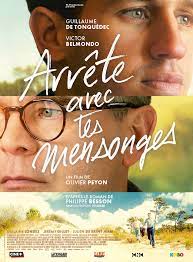
LIE WITH ME/ ARRETE AVEC TES MENSONGES
France, 2022, 97 minutes, Colour.
Guillaume de Tonquedec, Victor Belmondo, Guilaine Londez, Jeremy Gillet, Julien de Saint Jean.
Directed by Olivier Peyon.
Remembrance of Marcel Proust pervaded the watching of this very personal drama, themes of time lost, time remembered, in search of times past, time regained. And, on checking on the Wikipedia entry for the novelist, Philippe Besson, it revealed that he had, indeed, included Proust himself as a character in one of his novels. And the themes of homosexual orientation. The novel and the film are autobiographical.
This is a fine film, a subtle drama with a screenplay that draws the audience in, a story of the present but many flashbacks, memories of 1984, each era continually throwing light on understanding of the two central characters, the past Eliminating the present, the present offering more explanations of the past.
The film opens with the 42-year-old novelist, Stephane Bellcourt, driving to the town where he grew up but had left 35 years earlier. Cognac is the main product of the region and the town is celebrating its bicentenary of production. Stephane has been a prolific novelist, two novels a year, but a recent dry patch, but writing a short story about his town, and the consequent invitation. Stephane is played quietly and effectively by Guillaume de Tonquedec (who more than resembles the novelist in appearance). Stephane is hosted by the local Gaelle, organising his program for the celebrations, book signing, interviews, bicentenary dinner speech. She is played quite strikingly by Guillaine Londez.
As he returns to the town, Stephane begins to remember, age 17, final year at school, quiet, bespectacled, gazing at fellow student, Thomas, who responds but is strongly determined that nobody know about the relationship. They meet in secret – some frank sexual scenes – at the swimming pool, at the lake, then in Stephane’s room at home. These flashbacks are spaced right throughout the running time of this film, culminating in Thomas being photographed by camera enthusiast, Stephane, and then going to Spain to work on his uncle’s farm. Never returning. Stephane then left the town to pursue his writing career.
But, the main drama in the present is complex. Stephane encounters Thomas’s son, Lucas, whom he didn’t know existed. Lucas is eager to meet Stephane and, gradually, the audience learns why, Lucas’ life with his father, sad, tragic, – and Stephane not knowing it. And so, the Proustian titles, time lost, time remembered…
The performances are most persuasive, Victor Belmondo (grandson of Jean-Paul) is Lucas. Jeremy Gillet and Julien de Saint Jean are effective as the younger Stephane and Thomas, and the audience always tantalised by looking at Stephane in the present and trying to connect have the young 17-year-old became this man, and tantalised by the sad knowledge of what happened to Thomas.
The English title is too clever with its pun indicating sexual nuance. But, it is not clever enough in actually translating and communicating the tone of the French title, translated “Stop with your lies” which Stephane reveals is a comment that his mother used to make about his stories, making them up in observing people around him, the equivalent of lies. Ultimately, this is a drama about facing the truth, telling oneself the truth, admitting the truth to others
- The original title, Stephane’s mother’s comment, lies and creating stories? The play on words with the English title, the sexual connotation, but not translating from the tone of the original French?
- The setting, the small town, 1984, 35 years later, the production of cognac, the processes and storage, celebrating the bicentenary? The past, school, swimming pool, the lake, the farm, Stephane’s room? The musical score, songs of the time? 30 years later, hotels, government, the dinner, revisiting the past locations? The musical score?
- The introduction to Stephane, in the car, driving to the town, after 35 years? Age 42, serious, novelist, two novels are year, the dry period, homosexual, relationships and failures, the short story about Cognac? The introduction to Thomas, on the bike, 35 years earlier?
- The structure of the screenplay, based on the novel, Stephane based on the life of the novelist? The framework of 35 years later, 21st-century, the older perspective on the town and characters, the inserts of memory, the flashbacks, 1984? The gradual awareness by the audience of each of the characters, the past eliminating what was happening in the present, the present throwing light on the past? Nuances and subtleties?
- 1984, 17-year-olds, the sexual attraction, Stephane and his shyness, looking at Thomas, Thomas giving him the note, going to the pool, the sexual encounter? Thomas wanting it kept secret? Thomas and his relationship with the other students? The effect on Stephane, smiling, not worried about the secrecy, the encounter in the toilet, the note, going to the lake, the swimming, sex, exhilaration? Thomas coming to Stephane’s room, the contrast with music, style, dancing, Stephane’s mother coming home but going to rest, their not being discovered? The bond between the two, Stephane and love, Thomas and love, not admitting it, Stephane wanting him to say it? The graduation, the lake, the photos? Thomas leaving for Spain, never coming back? Stephane leaving? The cumulative effect of the past and the present and the audience understanding the characters?
- The present, Stephane, 42, 35 years away, his career, living in America, the invitation to come back for the bicentenary, his delay in accepting, break-ups, dry patch, writing the story? The welcome to the town, the character of Gaelle, organising, promotion, her vitality, looking after Stephane, some of the difficulties, his absences, clashing with Lucas, the late-night eating, conversation, eventually telling her the truth? His going to the bookshop, the book signing, meeting Lucas? The reception, going to see Lucas, the confrontation with him? Going to the cemetery, the visit to the grandmother, his speech for the bicentenary, talking about himself, frankly, the truth? (And Lucas saying he would probably right about this also?)
- Lucas, with the American group, in the town, leaving, living in America, with the tours and promotion, his shepherding the group, relationship with them, the tour of the cellars and the barrels, inviting Stephane, Stephane not drinking? His indication that he did not know much about Stephane? At the book signing, the later talks, the confrontation? Stephane discovering that Lucas had initiated the invitation, that he had read everything? The film’s gradual revelation of Thomas and the story of his going to Spain, the marriage, compelled, the birth of Lucas, returning to the village, his wife not wanting to stay and leaving, his departure? Lucas trying to understand, the revelation that his father was lively and smiling only when Stephane was on the television? Lucas challenging his father? Sorting out his study, and the letter from 1984 for Stephane, the explanations? And the tragedy of Thomas, the unhappy life, the shame, sexual orientation, hanging himself?
- The atmosphere of the town, the celebration, pride in the cognac, 200 years, the authorities, the welcome, the comment about gay authors and caution, the celebration, the meal, Stephane late, his speech?
- Stephane, the admission of the truth to Lucas, first love, main love, disappointment with Thomas’s disappearance, sending the photo, Lucas finding the photo and giving it back, the sadness, the cemetery, the light touch in meeting Lucas’s grandmother, the welcome, the touch of reality and humanity?
- The farewell, Lucas and the group, the invitation in America, Stephane and the invitation to Paris, the embrace?
- Time lost, time remembered, regrets, tragedy, resolution?
Haunted Mansion/ 2023
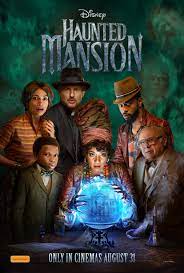
HAUNTED MANSION
US, 2023, 123 minutes, Colour.
LaKeith Stanfield, Rosario Dawson, Owen Wilson, Tiffany Haddish, Danny DeVito, Jamie Lee Curtis, Chase W .Dillon, Jarrod Leto, J.R.Aducci.
Directed by Justin Simien.
This review has been very much influenced by the experience of watching Haunted Mansion at a media preview, reviewers present but also a great number of children with their parents, youngsters.
At the end of the screening, the critics dismissed the film, seeing little value in it, finding it tiresome. And, that is confirmed by a number of reviewers and, checking the bloggers on IMDb, so many dismissing it as boring, unfunny, trite, seen it all before…, critical of Disney for remaking the story.
However, the experience of watching the film was for this reviewer quite different. Quickly becoming conscious of the youngsters in the audience, their responses of delight, especially with the ghosts, the hauntings, the struggles with the ghosts. This was made easy because one of the central characters is a nine-year-old boy, his father dead, his mother wanting to start a new life, their going to the mansion and immediately being haunted and terrified, fleeing, but the ghosts continually dragging them back to the mansion. There were several jump moments which seemed to delight the young audience.
The other thing noted about the young audience was its response to the jokes, to the funny lines, to the humour. Reviewers and bloggers dismiss this as being old hat, obvious, not very funny. But, it would seem that the young audience found these jokes very funny, a lot of out-loud laughter. While the adults may have heard the lines before, maybe this was the first time for the youngsters and they found it all quite funny.
In fact, the film has a strong cast, a very sympathetic LaKeith Stanfield as the sad widower, physicist, dragged into photographing the ghosts with a camera he had been working on. Rosario Dawson is a nice mother and Chase W. Dillon, an engaging nine-year-old. And the film has the comic skills of Danny DeVito as an ageing professor, Owen Wilson as an unconventional (emphasis on the con) priest, Tiffany Haddish as a loud medium and, rather surprisingly, Jamie Lee Curtis as a medium ghost from the past. An unrecognisable Jared Leto is the villain. The director, Justin Simien, has a reputation for satirical film and television, especially Dear White People.
So, an entertainment, PG rated, geared especially for children from 10 to 15 or so who can be accompanied by the parents who may be pleased that the young ones are actually enjoying the haunted mansion and the ghostly hijinks.
1. The Disney theme park? Various film versions? Bringing the theme park ride alive?
2. The Louisiana setting, city of New Orleans, ordinary life, the visualising of the mansion, exteriors, interiors, the ghosts, the special effects, the mansion and surroundings? The visit to the city, the police, the University…? The Crump mansion? The musical score?
3. The focus on Ben, his personality, reticent, science, optics, the encounter with his wife, discussion about ghosts, her tours? Transition to his being down and out, crusty, the tourists, his comments?
4. Gabby and Travis, the U-haul, the mansion, entering, the darkness, Travis and the room, the ghosts, their escaping back to the city?
5. Father Kent, an Owen Wilson character, clerical, deadpan humour, challenging Ben? The offer of the money? Ben going, his camera, pretending to take photos and notes, driving away?
6. The ghosts, appearances, pursuing the characters, forcing them to return to the mansion? Camping in the mansion, the experiences after midnight?
7. Harriet, the medium, dress and style, reputation, self-promotion, conducting the seances, the strange phenomena, the pen and the writing? Her leaving, having to return? The story of Madame Leota, her reputation, wanting to get in touch, finding her head in the globe after unpacking the trunk? Contact with Madame Leota? The silence, Harriet not affected, then entering into the other world?
8. Bruce, age, reputation, never having been to the mansion, wanting to go, his heart condition, the repartee with Father Kent? The discussions, the documents, Father Kent stealing them, Bruce coming to the mansion, trapped?
9. The back story, gradual uncovering, William Gracey, the portrait, suicide, the death of his wife? The gradual revelation about Crump? The change of perspective on the ghosts, 999, their being trapped, Crump needing one more willing human to become a ghost?
10. The seances, Ben and his experiences, the pursuits, getting advice from Gracie, getting onside with the ghosts and their support? The advice of Madame Leota?
11. The human story, Travis, wanting contact with his father, Ben as a father figure, relationship with his mother? Bonding with Ben? Aiming to protect him, his going down the hall, retrieving the hat, in the car, coming out, his involvement? Gabby, her love for her son, protecting him?
12. The stunt work, the chases, the transforming mansion, the ghosts?
13. Father Kent and the truth about his identity?
14. The buildup to the confrontation with Crump, his appearance, hat in the box, diabolical, Ben, his grief, memories of his wife, telling the sad story of her death, his being willing to sacrifice himself? Then turning against Crump, defying him, Crump gradually going down into the grave?
15. The range of personalities of the ghosts, their being onside, helping, the old captain and taking him back to the sea, Gracey and his collaboration?
16. The popularity of the Disney ride, on screen, the target audience of families and youngsters?
Gray Matter
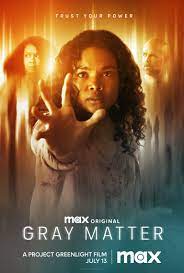
GRAY MATTER
US, 2023, 87 minutes, Colour.
Mia Isaac, Jessica Frances Dukes, Garrett Dillahunt, Andrew Liner.
Directed by Meko Winbush.
This is part of the Project Greenlight program, background to the film is in the television series. To that extent, this is an experimental film, an opportunity for a new director, Meko Winbush. It is a horror film about special powers, supernatural, in a special group of people. Given the central character, a teenage girl, African-American, this would seem to be principally a Young Adult drama.
The film opens with a sinister situation, a woman, Ayla (Jessica Frances Dukes) confronting a policeman after a chase, threatening, the policeman killing himself. Then a transition to 15 years later, the woman now with her daughter, Aurora (Mia Isaac), protecting her daughter, homeschooling, isolation, the young girl with powers and her mother training her to exercise them, to control them. But, the rebellious daughter does sneak out of the house and encounters an agreeable young man. She meets him again, with his friends, and a terrible situation arises, Aurora unable to control her powers, the death of the young man.
She goes into frenzy, unconsciousness, and is rescued by Derek (Gareth Dilllahunt) who also has the powers and knows all about Aurora and her mother. He offers to help – and most of the film is in Aurora’s consciousness, scenes from the past appearing, her trying to control her memories, to stop Derek entering into her consciousness. And her imagination takes various forms including the dead young man, her mother, all pleading with her to reveal where her mother is. Derek, initially kindly, seems all the more sinister. Ultimately, Aurora meets her mother and explains the truth, Derek accusing her of murders, her helping Aurora go back into the past and see that Derek was responsible and has been blaming the mother and pursuing her.
Which all builds up to a confrontational climax. In many ways slight, but an interesting initial exercise for the director, a film for younger target audience.
- The title? The brain? Gray areas of responsibility?
- The basic premise, people with special powers, the control, exercise, for good and ill?
- The opening, the chase, Ayla and the confrontation with the policeman, the threats, her control, his death?
- 15 years later, mother and daughter, the mother protecting her daughter, homeschooling, the teenage girl, exercising her powers, control? Continually on the move, her mother asking her to exercise the power on moving the box of books? Aurora and her reaction?
- Aurora, rebellious teenager, the watching of the television sitcom and its themes?
- Aurora slipping out, the encounter with the young man, friendly, slipping out again, the group playing, talking, the bond with the young man, her seizure, uncontrolled, the effect on the young man, his death?
- Aurora being rescued by Derek, her bewilderment, his offering to help? Trying to into her mind, Aurora blocking him? His wanting the whereabouts of her mother? Blame for murders?
- The core of the film with Aurora’s nightmares, the various locations, situations, appearances, her mother, the dead boy…? Their all asking the whereabouts of her mother? Aurora and her resistance? The characters appearing and disappearing, Derek and his continued questions?
- Aurora eventually meeting her mother, suspicious, her mother telling her the truth, revisiting the situation, Derek and the killings, blaming the mother?
- The buildup to the final confrontation with Derek, the visuals, the drama, the superpowers? And mother and daughter safe?
Strays/ 2023

STRAYS
US, 2023, 93 minutes, Colour.
Voices of: Will Ferrell, Jamie Foxx, Isla Fisher, Randall Park, Brett Gelman, Rob Riggle, Josh Gad, Sofia Vergara. With Will Forte, Denis Quaid.
Directed by Josh Greenbaum.
With a comedy like Strays, words that come to the reviewer’s mind include: raunchy, crude, crass, gross, offensive. And it can be said, they are all applicable. But, response very much depends on sensibilities, whether this kind of crude comedy appeals, on sensitivities which find the jokes and the treatment objectionable, too much. But, this is not the case for everyone, and the reviewer or also has to keep this in mind.
While often it seems very much like a cartoon in characters and situations, this is a live-action film about dogs. In fact, dog lovers, despite the jokes, might very well be intrigued by the extraordinary performances of the dogs themselves, and wonder how much is the training of actual dogs and how much is the use of animatronics, especially with the dogs and their moving mouths for the dialogue. Yes, the dogs really come alive, and are very convincing characters.
And a review had better note that the humour, pervasive, relies on constant (incessant) four (and beyond)-letter words and exclamations, probably tiresome even for tolerant viewers, magic mushroom hallucinations, a lot of sex jokes, explicit and innuendo, and bodily parts and bodily functions. Definitely crude, often crass.
But, strangely enough, the story is actually full of sentiment, even sentimental at times, and moving towards a very nice ending, domestic bliss. In a way, the audience can’t help liking the dogs. And, who are they? First of all, there is Reggie (voiced by Will Ferrell), who was at the beck and call of Doug (Will Forte creating a character who is an extreme slob), who resents Reggie because he was the pet of a girlfriend who walks out on him. He persecutes Reggie, verbally abuses him, tosses the ball as far away as possible – but the good-natured Reggie thinks this is all a game and thinks Doug is a wonderful owner. When Doug takes Reggie on a three hour drive and strands him, he is befriended by a smart-talking Bug (voiced by Jamie Foxx). Gradually, with the help of Bug’s other friends, Maggie (Isla Fisher as an Australian collie) and Randall Park as a former police dog trainee, now with a cone and working at an old folks home, Hunter, Reggie learns the truth. And the film becomes a quest, a revenge film, Reggie wreaking havoc on Doug (and we know where).
There are lots of adventures along the way, meeting police dogs looking for a young girl, the real Dennis Quaid with binoculars seeing a giant eagle swoop on Bug, getting lost, finding landmarks, and an eventual confrontation between Reggie and Doug (and what we might have imagined does happen).
Lots of jokes, many crass, others very funny, and, as has been said, quite a deal of sentiment, the talent of the voice cast blending with the expert photography and training of the dogs, their looking to camera, the tilt of their heads, the cheeky looks, which means that the dogs really become credible characters! But, as the government classification advice says: MA: Strong crude humour, sex, coarse language and drug use.
