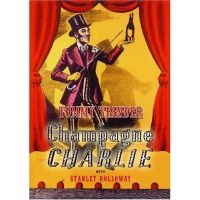
CHAMPAGNE CHARLIE
A, 1944, 75 minutes, Black-and-white.
Tommy Trinder, Stanley Holloway, Betty Warren, Jean Kent, Robert Wyndham, Guy Middleton, Austin Trevor.
Directed by Cavalcanti/Albert Cavalcanti.
Tommy Trinder was a popular entertainer, singer, especially on stage, radio and some films. Here he stars as a musical singer of the 1860s, George Leybourne, composer of a number of popular songs of the time, especially Champagne Charlie and The Daring Young Man on the Flying Trapeze.
This film appeared in 1944, during World War II, appealing to public spirit, the popular songs of the 19th century, the music halls – some morale boosting during the war. It was directed by the Brazilian born director, Albert Cavalcantiy, who moved to Europe, to England, working on documentaries and then a number of feature films including Dead of Night.
Featuring alongside Tommy Trinder is veteran singer Stanley Holloway (20 years before he immortalised Alfred Dolittle in My Fair Lady).
Trinder plays a miner coming to London with his brother who wants to become a fighter but whose lungs have prevented this because of his work in the mines. His brother, however, is a success as a singer, catching the eye of the manager of the theatre, Bessie, played by Betty Warren, who has an attractive young daughter, dancer, played by Jean Kent. She is being courted by a young upper-class gentleman.
The singer is persuaded to change his name to George Leybourne, success, Trinder bringing alive the songs (some of which written by screenwriters for the film, a range of songs emphasising different kinds of alcohol). He comes to the attention of a rival singer, well-established, played by Stanley Holloway. There is rivalry between them, especially in the range of songs on alcohol, each trying to better the other in performance and popular response. Ultimately, one challenges the other to a duel, neither prepared for it, doing some training with pistols, and a farcical encounter.
At the time, it would seem that the musicals were under threat from the theatres, complaints about drawing audiences away from theatre. The father of the young gentleman courting Bessie’s daughter is in charge of the commission – and, it is revealed that he was courting Bessie back in the past, his father intervening against lower class wedding, his now repeating it for his son. There are hearings about musicals with the two singers and Bessie giving evidence. Ultimately, the Lord comes to visit the theatre music hlal and is welcomed by everyone – and, happy ending all round.
George Leybourne’s song, Champagne Charlie was so popular that he was nicknamed with it.
A film from England’s past, the war years – but, for those interested in old-fashioned rollicking stories and, especially, the musical songs and the invitation to join in, a pleasing entertainment.