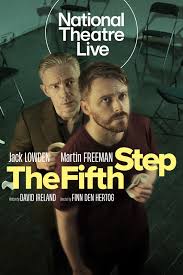
THE FIFTH STEP/NATIONAL THEATRE LIVE
UK, 2025, 82 minutes, Colour.
Jack Lowdon, Martin Freem an.
Directed by Finn Den Hertog.
An impressive dramatisation of the play by David Ireland, part of National Theatre Live. The title refers to the 12 steps of the Alcoholics Anonymous program, the Fifth Step, Confession.
The staging: this is theatre in the round or, specifically, a square stage, with the audience on all sides, visible during the whole performance. With only two in the cast, it is important that they move around so that the audience can see the various aspects of the performance, their walking, standing, sitting, removing the props and organising the stage. The running time is comparatively brief but there are several scenes, indicated by lights and the work of the cast in preparing for the next scene. There is a strong musical score.
Background of Alcoholics Anonymous: the reality of alcoholism, an illness, an addiction. The hold on an alcoholics, mental issues, physical, emotional, relationships. And the development of meetings, the AA plan, the 12 steps, the prayer, the religious dimension, God/religion/not.
The process: the sponsor, the choice of the sponsor, meeting with the sponsor and the arrangements, initial wariness, the raising of the gay issue of the sponsor, concern, curiosity about attitudes and behaviour. Luca, his age, experience, lack of experience, curiosity and concern. The contrast with James, his age, experience, his past sponsor, the actual issue, the aftermath and consequences.
Sponsorship: James, no drink for 25 years, the effect, the stories about his own supervisor, his marriage, son? The contrast with Luke and his age and lack of experience? The importance of power as regards the sponsor, the exercise of power, control, interests, decisions.
The portrait of Luca: age, appearance, clothes, manner, work on not, lack of education, long clash with his father, bad memories, the drinker, with his mates? Contemporary culture, sexuality, sexist, his language, focus. The drink and its effect. His myopia about his masturbation, 20 times a day, expectations of work, use of time. James and the recommendation for some religious experience, spiritual experience. The effect on him, able to quote the Scriptures, Old Testament/New Testament, the Jesus language, revivalist language. His genuine response, the issue of the woman at the church, married, the relationship, awkwardness, his response to James’s reaction about religion. Time passing, Luca not drinking, somebody reporting him as a drinking, but non-alcoholic, Luca adapting. Final crisis with James, the issue about the married woman, James talking as if the possibility was his own wife, the consequences for Luca, not wanting James as sponsor, and arriving and experiencing the step of Confession and the question of what would follow.
The ported James: his age, 25 years not drinking, his marriage, his son, has a best friend, not telling him about alcoholism, the background of his own sponsor, the gay man and the aftermath. The years of marriage, the issue of how strong the relationship with his wife, his son moving away from home. His attitude towards religion, saying he was a recovering Catholic, hostile to religion, but speaking of spiritual experiences, references to Buddhism, slights on Christianity. The issue of his being Luca sponsor, responsibility, power, his agenda. The melodrama of his suspicions about the woman and Luka’s relationship, as regards his own marriage and wife. Luca refusing him as sponsor and the effect on his emotions, future.
Effect for the audience of watching the stage play, a filmed version, the performance, the focus on the dialogue and words, the focus on action and the characters and performance. The involvement of the audience with the characters and the issues observing, emotional involvement.