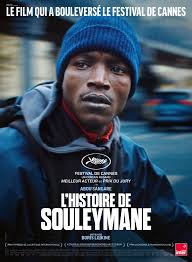
THE STORY OF SOULYMANE/ L'histoire de Soulymane
France, 2024, 93 minutes, Colour.
Abou Sangare, Alpha Ouimar Sow, Nina Meurisse.
Directed by Boris Lojkine.
Soulymane is one of many refugees coming to France from Africa, in particular from Guinea-Conakry. The audience spends two hectic days with him in Paris, the screenplay and the performance from Abou Sangare, instantly gripping us. For audiences who have had little to do with refugees and their difficulties in getting to a country, living without papers, trying to get access to documentation, in the meanwhile trying to work, sometimes even to survive day by day, this film is the strongest of challenges. Those who work with refugees and experience their struggles will immediately identify (and urge as many as possible to go to see the film, to learn and appreciate).
In fact, the film opens with Soulymane making an appointment for an interview to get his papers. However, he is at the mercy of other refugees who actually exploit the newcomers. There is Barry, a wheeler dealer, inventing stories for the interviewees, suggesting that they are members of an active political group in their own country, committed to causes (and with a list to help the interviewee remember they were supposed to have done, the names of the people that they worked with, precise and dates and statistics, which Soulymane and others have difficulty in memorising). And Barry Is demanding for payment, abrupt in manner, some few moments of sympathy but on to the next refugee.
And there is Emanuel, also exploiting newcomers, sharing his permit card so that they can work on deliveries of food, on their bikes through the busy city, accidents with cars, time demands, mean-minded and racist Café managers, police enjoying taunting the refugees, and Emanuel demanding 50% of Soulymane’s earnings.
There are time demands and constant pressures, hurrying to catch trains, connecting buses, missing connections and sleeping out, booking in advance a bed for the night in one of of the many hostels, large rooms full of bunks, and lining up at the soup kitchens for something to eat and drink.
There is constant pressure on Soulymane, phone calls from a girlfriend from Guinea who is thinking of marrying, double dealings from Emanuel, a fight and injury, trying to pin down Barry for coaching for the interview.
But, thankfully interspersed are some moments of quiet, but then on with the pressure. While most of the supporting characters here are refugees, many of them sympathetic to Soulymane, and some glimpses of French people who are kind.
And, finally, the interview itself, tense, Soulymane drawing on his coaching to answer the questions, the interviewer a sympathetic listener – but who has heard all this many times before. Sold does eventually, haltingly, at the end, tell his story of home life, decision to leave home, travels, ill-treatment, his hopes.
As mentioned, the film is often hectic, handheld camera, running after and with Soulymane, speeding through the night city. At the end, the audience has to decide, along with the interviewer, whether Soulymane is telling a story that deserves refugee status and acceptance in France for him.
- Awards and nominations, an important film for those interested, concerned about, refugees, treatment and status? African refugees in France?
- The French settings, the city, the streets, cafes, food deliveries, bikes and cars, the city at night, busy? Homes and apartments, centres for refugees, soup kitchens…? The musical score?
- The action taking place over two days, hectic, the pressure, booking the interview, preparing for the interview, the interview itself?
- Soulymane,, appearance, age 25, Guinea-Conakry, the opening and the office, the interview and planning the final interview? The pressure on him?
- The scenes of Soulymane at work, his bike, hitting the car, pace, the crowds of the delivery workers, placing orders, the phones, the need for the codes, the delays, the treatment by the owner, the impact of the various deliveries, the woman refusing delivery because of the bike crushed by the crash, the old man on the top floor, kindly to Soulymane his story, his son and the phone call, the police in the car, teasing and taunting? The pressure for the work?
- Accommodation, phone calls to ask for a bed, getting the Metro, connecting with the bus, persuading the driver to open the door, the crowds of refugees on the bus, friendly, clashes? The night at the hostel, the number, the kindly neighbour, is good advice about the interview, changing the bed, the meals? The phone calls during the night, his girlfriend, talking about her intended marriage to the engineer? Wanting to talk to his mother? Her coming on the phone?
- The discussions with Barry, Barry’s role, the scenario for stories, member of a social group, motivations, time of joining, place, dates, names of officials, imprisonment, the walls of the prison, the behaviour of the prison guards? Soulymane trying to memorise? The discussions with Barry, Barry’s impatience, demanding his money, providing the documents? The phone calls, Barry surly, eventually at the station, in the carriage on the train, the discussion, the list for the interview, handing over the documents, Barry giving him €40?
- Emanuel, his sharing his permit, illegal, Soulymane giving him half the earnings? Phone calls, not answering, going to the apartment, knocking, the encounter on the staircase, Emanuel pushing him, the injuries, face, hand? The confrontation? The €40?
- The next day and the pressures, Soulymane memorising, wanting to meet Barry, the preparation, the work and the deliveries, late for the bus, having to spend the night sleeping out, the soup kitchen?
- His friend providing the shirt, getting ready for the interview, going to the office, being called in?
- The interviewer, open, sympathetic, listening, typing, the recording? The question is, Soulymane going through the routine, all the details, trying to remember and be accurate? The interview a questioning him, telling him she had heard this all before, twice the week before? Her sympathetically offering him a chance to tell his actual story? Is telling it, his mother, mental illness, his father, wanting to do something to his mother, no education, mechanic, the decision to leave, Algeria, the torture in Libya? His emotions, hesitation, telling the truth, something of a relief?
- The interviewer saying he would get a document, welcome if accepted, a month to lodge an appeal?
- The film ending, the audience not knowing the decision, over to the audience, listening to Soulymane and believing him, or applying the rules strictly?